How to Connect 3 Monitor to Pc: How to Connect 3 Monitors to
You’re staring at your PC, probably with a single, sad little monitor, thinking, “There HAS to be a better way.” And there is. Adding more screens isn’t some dark art reserved for elite traders; it’s totally doable, and frankly, it changes how you get stuff done. I remember the first time I even considered it, thinking it would be this magical productivity boost. Spoiler alert: it wasn’t, not at first anyway.
Initially, I just plugged things in, half-expecting them to magically work. They didn’t. Cables everywhere. Error messages galore. It was a mess, a $200 cable mess, to be precise, that taught me a valuable, albeit expensive, lesson about how to connect 3 monitor to pc.
Forget the glossy tech reviews that make it sound like you just need to buy the most expensive thing and bam! Done. This is about understanding the actual hardware, the ports, and yes, sometimes, the frustrating limitations of your own machine.
Is Your Graphics Card Even Capable? The First Hurdle
This is where most people trip. Seriously. You’ve got this beast of a computer, or so you think, and you figure, “More screens, no problem!” But your graphics card, that’s the engine for your displays. Not all engines are built the same. Most modern GPUs, especially dedicated ones from NVIDIA and AMD, can handle three or even four monitors. Integrated graphics found on many budget motherboards? Not so much. You’re often looking at a maximum of two displays, and sometimes, performance can take a nosedive if you push it.
So, how do you check? Pop open your PC case (if you’re comfortable doing so) and look for a card that’s not directly plugged into the motherboard. It’ll have multiple video outputs. Or, right-click on your desktop, go to ‘Display settings,’ and look for ‘Advanced display settings.’ It should list your graphics adapter. A quick search for that adapter’s model number and ‘max displays’ should give you the answer. Don’t just assume your shiny new laptop can handle it; check its specs. I once spent three hours trying to get a third monitor to work on a work laptop that, as it turned out, was hard-limited to two by the manufacturer. Felt like trying to fit a square peg into a round hole, then realizing the hole was just too small to begin with.
The crisp whir of the CPU fan suddenly seemed like a mocking laugh. Honestly, it was infuriating. My entire plan to finally organize my coding windows across three screens was crumbling faster than a stale cracker.
Ports, Cables, and the Matrix of Confusion
Okay, so your graphics card is technically capable. Great. Now comes the cable jungle. You’ll see terms like HDMI, DisplayPort, DVI, and sometimes even older VGA. These aren’t just fancy names; they dictate the signal quality and the number of monitors you can connect *per port*. DisplayPort is generally your best friend for multi-monitor setups, especially if you’re aiming for high resolutions or refresh rates. It supports daisy-chaining (more on that in a bit) and higher bandwidth. (See Also: How To Connect Lenovo Yoga 910 To Monitor )
HDMI is common, but its multi-monitor capabilities can be more limited depending on the version. DVI is older but still works for many standard resolutions. VGA? Avoid it like a bad software update if you can; it’s analog and offers the worst picture quality. The key is to match your monitor’s input ports to your graphics card’s output ports. If you have three monitors and only two DisplayPort outputs on your GPU, you’ll need to use at least one HDMI or DVI port. This is where you might need adapters, and let me tell you, cheap adapters are a quick way to introduce ghosting or signal dropouts. I swear, I bought a $5 HDMI-to-DisplayPort adapter once that made my third monitor flicker like a strobe light at a bad rave. Took me ages to trace the problem back to that tiny piece of plastic.
Specifically, when you’re thinking about how to connect 3 monitor to pc, you need to be aware of the physical limitations of your GPU. If it only has, say, two DisplayPorts and one HDMI, that’s your physical limit for direct connections. Some newer graphics cards and monitors support DisplayPort MST (Multi-Stream Transport), which allows you to ‘daisy-chain’ monitors. This means you can connect one monitor to your PC, then connect the second monitor to the first, and the third to the second, all using just one DisplayPort on your graphics card. It’s like a chain reaction of screens, and it can be a lifesaver if your GPU is short on ports. However, not all monitors support this, and it can sometimes introduce minor latency or compatibility issues, so always check your monitor’s specs for ‘MST support’ or ‘DisplayPort Out’.
External Graphics Cards and Docking Stations: When Your Pc Says ‘nope’
What if your PC, bless its heart, just doesn’t have the horsepower or the right ports? This is where things get interesting, and potentially more expensive. External Graphics Processing Units (eGPUs) are a thing, though they’re usually geared towards gaming or heavy creative work and can be pricey. They connect via Thunderbolt 3 or 4 ports, which most mainstream PCs and laptops have. You buy an eGPU enclosure, slot in a compatible graphics card, and connect it to your PC. Suddenly, you’ve got access to a whole new set of video outputs. It’s like giving your computer a superpower boost, but it costs a pretty penny – think $300-500 just for the enclosure, plus the card.
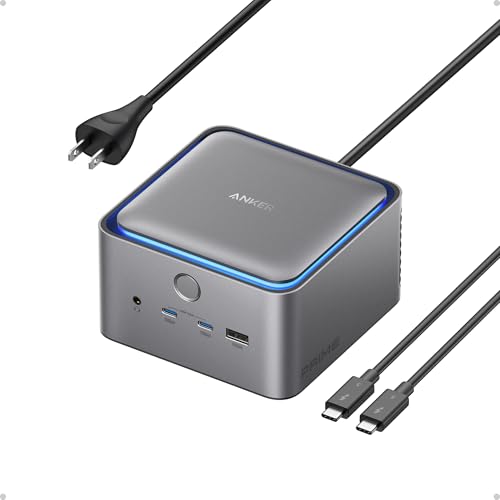
Then there are docking stations. These are fantastic for laptops, especially those with limited ports. A good Thunderbolt dock can provide multiple display outputs (HDMI, DisplayPort), USB ports, Ethernet, and even power delivery, all through a single cable connected to your laptop. This is often the most elegant solution for laptops, as it consolidates all your peripherals and extra monitors into one clean setup. Some USB-C docks can also drive multiple displays, but their performance is usually limited by the USB standard, often resulting in lower resolutions or frame rates compared to Thunderbolt or direct GPU connections. I used a USB-C dock for a while, and while it worked for basic office tasks, trying to watch high-def video on one of the docked screens resulted in noticeable stuttering. It was like watching a flipbook animation compared to the fluidity of my main monitor.
The tactile feel of plugging in that single Thunderbolt cable, knowing it’s powering three external displays, two external hard drives, and my keyboard, is surprisingly satisfying. It’s the digital equivalent of a perfectly organized toolbox.
Operating System Settings: The Fine-Tuning
You’ve got the hardware sorted. Cables are connected. Monitors are displaying… something. Now, you need to tell your computer how you want them to behave. Press the Windows key + P. This brings up the Project menu, which lets you choose between ‘Duplicate’ (all screens show the same thing – useless for productivity), ‘Extend’ (each screen is a separate workspace – what you want), ‘Second screen only,’ and ‘PC screen only.’ Always choose ‘Extend’ for a multi-monitor setup. (See Also: How To Connect Two Monitor In One Desktop )
Once extended, right-click on your desktop and select ‘Display settings’ again. Here’s where the real magic happens. You’ll see a visual representation of your monitors. You can drag and drop these boxes to match their physical arrangement on your desk. This is vital. If your physical left monitor is represented as the right monitor in Windows, your mouse cursor will jump between screens in a confusing way. Get this arrangement right, and moving your mouse between displays feels natural, like just sliding your hand across the desk. You can also set your primary display here – the one with the taskbar and icons that appear first when you boot up. Some people prefer their main monitor, others a side one. It’s personal preference, but getting it right makes a huge difference to daily workflow.
I found that after physically moving my monitors around to optimize desk space, I’d forgotten to update the display arrangement in Windows. For about two days, I kept trying to drag files to my right, only to have them vanish onto the left monitor. It was pure muscle memory gone wrong, a digital disconnect that felt incredibly clumsy. Took me half an hour of fiddling in settings to correct it.
Common Pitfalls and What to Watch Out For
People often ask about resolution and refresh rate differences between monitors. Can you mix and match? Generally, yes. Windows is pretty good at handling different resolutions and refresh rates. However, your system’s performance might be dictated by the weakest link. If you have one 144Hz gaming monitor and two 60Hz office monitors, your system might struggle to maintain high refresh rates if you’re trying to drag graphically intensive applications across all three simultaneously. Also, be aware of the maximum resolution your graphics card and ports support. Trying to run three 4K monitors at 144Hz on a mid-range GPU from five years ago is asking for trouble.
Another thing: cable length. Longer cables can sometimes introduce signal degradation, especially with higher resolutions and refresh rates. If you’re experiencing flickering or intermittent signal loss, try using shorter, high-quality cables. Stick to reputable brands for cables and adapters; the money saved on cheap ones is rarely worth the headaches they cause. I spent a good chunk of money, probably around $180, testing four different brands of HDMI cables before I found ones that didn’t cause my 4K monitor to randomly drop signal every other hour. It was an exercise in sheer frustration and a testament to how much quality matters in the small components.
There’s also the ‘ghosting’ or ‘smearing’ effect, where images leave a faint trail, especially on slower-moving objects. This is usually a monitor issue, not a connection one, but sometimes a poorly shielded cable or an overloaded port can exacerbate it. My advice? If you’re serious about a multi-monitor setup, especially for anything beyond basic productivity, invest in quality components from the start. It saves you the eventual, soul-crushing cost of debugging your own expensive mistakes.
| Component | My Experience/Opinion | Notes |
|---|---|---|
| Graphics Card (GPU) | Needs sufficient outputs and power. Most dedicated cards are fine for 3. Integrated graphics are risky. | Check specs for max display count and resolution. |
| Video Ports (DP, HDMI, DVI) | DisplayPort is king for flexibility (MST). HDMI is common but can be limited. DVI is okay for older setups. | Match ports to monitor inputs. DP 1.4+ is ideal for 4K/high refresh. |
| Cables & Adapters | CRITICAL. High-quality is non-negotiable. Cheap ones cause headaches. | Invest in certified DisplayPort or HDMI 2.0+ cables. |
| Monitors | Can mix resolutions/refresh rates, but performance may suffer. | Consistent refresh rate makes mouse movement smoother. |
| Operating System Settings | Crucial for mouse tracking and workspace setup. | Always ‘Extend’ and arrange icons physically. |
| Docking Stations (Laptop) | Great for consolidation, especially Thunderbolt. USB-C varies in performance. | Check display support and bandwidth for your specific model. |
Faq Section
Do I Need a Special Graphics Card to Connect 3 Monitors?
Not necessarily a ‘special’ one, but you definitely need a graphics card that *supports* three outputs. Most modern dedicated GPUs (like NVIDIA GeForce or AMD Radeon) have at least 3-4 video outputs. Integrated graphics on your motherboard are more likely to be limited to two. Always check your specific graphics card model’s specifications for its maximum supported displays and resolution. (See Also: How To Connect External Monitor To Macbook Air M2 )
Can I Use a USB-C Hub to Connect 3 Monitors?
Yes, but with caveats. Many USB-C hubs can drive multiple displays, often using DisplayPort Alternate Mode or Thunderbolt technology. However, performance can vary wildly. Thunderbolt 3 or 4 hubs are generally superior and can support higher resolutions and refresh rates. Cheaper USB-C hubs, especially those using standard USB 3.0 or 3.1, might limit you to lower resolutions (like 1080p) or lower refresh rates (60Hz), and might not support all three displays simultaneously at their full potential.
What Happens If I Try to Connect More Monitors Than My Graphics Card Supports?
Usually, nothing happens with the extra monitors. Your computer will simply ignore the attempt to connect beyond its limit, or you might get an error message. In some rare cases, especially with older hardware or unstable drivers, it could even cause system instability or crashes. It’s best to know your card’s limits beforehand to avoid frustration and potential system issues.
Does Connecting Multiple Monitors Slow Down My Pc?
Yes, it can, depending on what you’re doing. Your graphics card has to render each display independently. Basic desktop tasks, web browsing, and word processing will have minimal impact. However, if you’re gaming, running demanding video editing software, or multitasking heavily across all screens with high resolutions and refresh rates, you will notice a performance hit. The more pixels your GPU has to push, the more resources it uses.
Conclusion
Figuring out how to connect 3 monitor to pc can feel like a puzzle, but once you get past the initial hurdles – typically your graphics card’s capability and the right ports – it’s not rocket science. The biggest mistake I see people make, and one I definitely made myself, is assuming the cheapest cables and adapters will cut it. They won’t. Invest wisely there, and you’ll save yourself headaches that feel like trying to untangle a ball of Christmas lights blindfolded.
Remember to actually arrange your monitors in the Windows display settings to match their physical layout. It sounds obvious, but skipping that step is how you end up with your mouse cursor doing interpretive dance across your desk. It’s the little things that make the difference between a productive setup and a frustrating digital mess.
Honestly, the jump from one monitor to three was more impactful than I expected, and for less money than I spent on that first batch of faulty cables. Just be patient, do your homework on your hardware, and you’ll be enjoying that expanded digital real estate before you know it.
Recommended For You