How to Connect Samsung to Monitor: Quick Tips
So, you’ve got your shiny new Samsung monitor and you’re ready to get it hooked up. Simple, right? Well, sometimes it is, and sometimes it feels like you need an engineering degree and a prayer. I’ve been there, staring at a blank screen with a spaghetti junction of cables, wondering if I’d accidentally bought a very expensive paperweight.
Honestly, the sheer number of different ports and cable types out there can be enough to make anyone feel a bit daft. Then there’s the whole resolution and refresh rate dance that can turn a five-minute job into an afternoon of Googling.
But don’t sweat it. After wrestling with more setups than I care to admit, I’ve figured out the common pitfalls and the straightforward ways how to connect Samsung to monitor without losing your mind.
Finding the Right Connection Type
Look, this is the absolute first thing you need to nail down. Don’t even think about plugging anything in until you know what you’re working with. Your Samsung monitor, bless its digital heart, probably has a few different input options. You’ll see HDMI, DisplayPort, and sometimes even older stuff like VGA or DVI if you’ve got a slightly more vintage panel.
Your Samsung laptop or desktop will have matching outputs. The trick is finding the *best* match. HDMI is the most common, and for most people, it’s perfectly fine. It carries both video and audio, which is a nice bonus if you plan on using monitor speakers. But if you’re a gamer or someone who deals with high-resolution video editing, DisplayPort is often the king. It can handle higher refresh rates and resolutions, meaning smoother motion and sharper images.
I remember spending around $75 on a fancy adapter once, thinking it was the only way to get my new ultra-wide to work with my older laptop. Turns out, both had a perfectly good HDMI port that would have done the job just fine. Wasted money, pure and simple. Always check the ports on both devices first.
For most modern setups, you’re probably looking at HDMI or DisplayPort. These are digital signals, which means a cleaner picture compared to older analog connections like VGA. If you’re connecting a newer Samsung laptop to a newer Samsung monitor, chances are you’ll want to prioritize DisplayPort if available, especially for gaming or high-refresh-rate content.
The Cable Conundrum: What to Actually Buy
Alright, you’ve identified your ports. Now, the cable. This is where marketing departments get to have their fun. You’ll see cables advertised as ‘Ultra HD’, ‘144Hz Ready’, ‘Gold Plated’, ‘Shielded for Purest Signal’ – it’s enough to make you want to throw your hands up. Honestly, most of the time, the cable that came with your monitor or your laptop is perfectly adequate.
If you’re going for HDMI, a standard HDMI 2.0 cable will handle 4K at 60Hz. If you need higher refresh rates or 8K down the line, you’ll want an HDMI 2.1 cable. For DisplayPort, look for DP 1.4 or higher. The key is to match the cable standard to the capabilities of your monitor and your graphics card. Trying to push 144Hz over a cable that only supports 60Hz is like trying to fill a fire hose with a garden tap – it just won’t happen. (See Also: How To Connect Monitor To Sound Card )
I once bought a ridiculously expensive HDMI cable – I’m talking north of $50 – because the salesperson swore it was the only one that could handle the 1440p resolution at 144Hz on my new setup. Turns out, the $15 cable I found on Amazon worked identically. The signal quality difference for most people is negligible, bordering on non-existent, unless you’re dealing with extremely long cable runs or trying to push the absolute bleeding edge of specs.
Connecting via HDMI: The Universal Go-To
HDMI is probably what you’ll use most often. It’s ubiquitous, simple, and carries both video and audio. Most Samsung monitors and laptops will have at least one HDMI port.
- Grab a standard HDMI cable. Make sure it’s in good condition – no kinks or frayed ends.
- Plug one end into the HDMI output port on your Samsung device (laptop, PC).
- Plug the other end into the HDMI input port on your Samsung monitor.
- Power on both your monitor and your Samsung device.
- Your monitor should automatically detect the signal. If not, you might need to use the monitor’s on-screen display (OSD) menu to manually select the HDMI input.
Sometimes, after plugging everything in, you’ll see nothing but a black screen. Frustrating, I know. This is often because your computer hasn’t automatically recognized the external display. You might need to go into your computer’s display settings. On Windows, a quick press of the Windows key + P will bring up projection options; choose ‘Duplicate’ or ‘Extend’. If that doesn’t work, right-clicking on your desktop and selecting ‘Display settings’ is your next step. You can usually detect displays from there.
Displayport: For the Power Users (and Gamers)
DisplayPort is where things get a bit more serious, especially if you’re into gaming or high-refresh-rate visuals. It’s designed for high bandwidth and can daisy-chain monitors, though that’s a whole other rabbit hole.
The process is almost identical to HDMI, but the cable and ports are different.
- Locate the DisplayPort output on your Samsung device (usually a graphics card on a PC, or a specific port on a laptop).
- Find the DisplayPort input on your Samsung monitor.
- Connect them with a DisplayPort cable (make sure it’s the correct version, like DP 1.4, for your needs).
- Power everything on.
- As with HDMI, your device should detect the monitor. If not, use your OS display settings or the monitor’s OSD to select the DisplayPort input.
When I first tried to connect my gaming rig to a high-refresh-rate monitor, I used an HDMI cable. It worked, but I was capped at 60Hz. I assumed my graphics card was the bottleneck. After a week of banging my head against the wall, I noticed the monitor *also* had a DisplayPort input. Swapping to a DisplayPort 1.4 cable instantly gave me access to the full 144Hz. It felt like unlocking a hidden cheat code for my entire visual experience, turning stuttery motion into buttery smooth gameplay. The difference was night and day, like switching from black-and-white TV to 4K HDR.
USB-C: The All-in-One Convenience
If your Samsung laptop and monitor both support USB-C with DisplayPort Alternate Mode (which many modern ones do), this is often the cleanest and simplest solution. One cable can carry video, audio, data, and even power your laptop!
This is fantastic for reducing desk clutter. Just one USB-C cable from your laptop to your monitor, and bam – you’re connected. Make sure your laptop’s USB-C port supports video output (often indicated by a Thunderbolt symbol or a DisplayPort symbol next to it) and that your monitor has a USB-C input that supports video. (See Also: How To Monitor Connection Pool In Net )
It’s like having a magic wand for your desk setup. My setup went from a mess of cables to just one clean line after I switched to a USB-C connected monitor. Honestly, if you have the option, it’s the way to go for pure convenience.
| Connection Type | Pros | Cons | My Verdict |
|---|---|---|---|
| HDMI | Widely compatible, carries audio | Can be limited by bandwidth on older versions |
Great for general use and most setups. Reliable and easy. |
| DisplayPort | Higher bandwidth, supports higher refresh rates and resolutions | Less common on laptops than HDMI, can be slightly more expensive |
The choice for serious gamers and professionals needing top-tier visuals. |
| USB-C (with DP Alt Mode) | Single cable for video, audio, data, and power | Requires compatible ports on both devices, can be expensive |
The ultimate convenience if your gear supports it. Transforms your desk. |
According to a report by the Consumer Technology Association, the adoption of USB-C for display connectivity has been steadily increasing due to its versatility and ability to simplify device connections.
Troubleshooting Common Issues
Okay, so what happens when it doesn’t just *work*? This is the part that really tests your patience. If you’ve connected everything correctly and still have a blank screen, don’t panic. I’ve seen situations where a simple driver update solved a week-long headache. Make sure your graphics card drivers are up to date. Outdated drivers are a notorious culprit for display issues.
Sometimes, the monitor’s EDID (Extended Display Identification Data) isn’t read correctly by the computer. This is where manually selecting the input on the monitor and using the ‘Detect’ display option in your operating system’s settings can help. If you’re using a docking station or a USB-C hub, that’s another point of potential failure. Try connecting directly to the monitor first to rule out the adapter or dock as the problem.
I once spent three solid hours trying to get a monitor to work, only to discover the power cable for the monitor itself wasn’t fully seated. It’s the little things, right? Don’t discount the simplest physical connections. (See Also: How To Connect Surface Pro 2 Monitor To External Keyboard )
How Do I Connect My Samsung Phone to a Monitor?
Connecting a Samsung phone to a monitor usually requires a USB-C to HDMI adapter or a specific USB-C hub that supports video output. Some higher-end Samsung phones also support Samsung DeX, which can be accessed wirelessly or via a cable to a monitor for a desktop-like experience. Check your phone model’s compatibility with display output over USB-C.
Why Isn’t My Samsung Monitor Detected?
If your Samsung monitor isn’t detected, first ensure all cables are securely plugged into both the monitor and your computer. Try a different cable, as a faulty cable is a common cause. Restart both your computer and the monitor. If using a docking station or adapter, try connecting directly to the computer. Finally, update your graphics drivers and check your computer’s display settings for a ‘Detect’ display option.
Can I Connect My Samsung Laptop to a Monitor Wirelessly?
Yes, many Samsung laptops and monitors support wireless display technologies like Miracast or Wi-Fi Direct. You’ll typically need to enable wireless display casting on both your laptop and monitor (if supported) through their respective settings menus. This is often more convenient but can sometimes introduce latency, making it less ideal for fast-paced gaming.
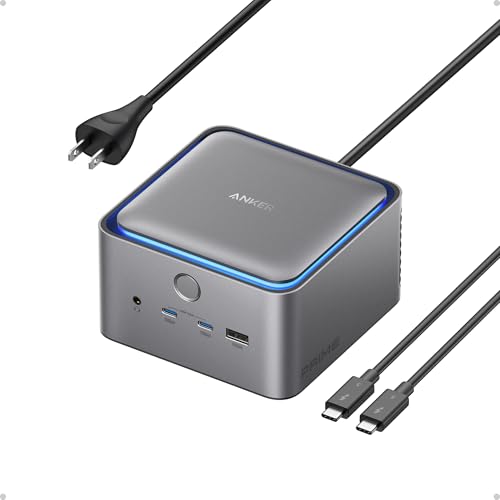
The USB-C Thunderbolt 4 Dock: A Glimpse Into the Future
For those of you with newer Samsung laptops, especially those rocking Thunderbolt 4 ports, a Thunderbolt 4 dock can be a revelation. It’s essentially a super-powered USB-C hub. Not only can it connect to your Samsung monitor (often multiple monitors), but it can also hook up your keyboard, mouse, external hard drives, and even charge your laptop, all through a single cable.
It’s an investment, sure, probably in the ballpark of $150 to $300 depending on the brand and features. But if you’re constantly plugging and unplugging your laptop, or you have a minimalist desk setup in mind, it’s a serious productivity booster. The sheer convenience of one-cable docking is something you can’t really appreciate until you’ve experienced it. It makes transitioning between your home office and a mobile setup incredibly fluid.
Verdict
So, there you have it. Connecting your Samsung to a monitor isn’t rocket science, but it’s also not always as plug-and-play as the marketing might suggest. The key is to identify your ports, choose the right cable, and know where to look if things go sideways. Don’t be afraid to experiment with different inputs or cables if your first attempt doesn’t yield the results you want.
Honestly, the jump from a tiny laptop screen to a proper external monitor can transform how you work and play. Make sure you’re getting the most out of that visual real estate by understanding how to connect Samsung to monitor effectively.
If all else fails, and you’ve tried everything from driver updates to swapping cables, sometimes just giving it a 10-minute break and coming back to it with fresh eyes can work wonders. I’ve found that stepping away often helps me spot the obvious mistake I was too close to see.
Recommended For You