Can I Charge iPhone Wirelessly? The Truth About Wireless Charging
I remember the first time I got a wireless charger. I was so excited; cutting the cord felt like a futuristic dream. This was supposed to be the answer to my messy nightstand, a sleek solution to the daily charging shuffle. My mistake? I didn’t do enough research, and I ended up buying a cheap, slow charging pad that barely kept up with my iPhone’s battery drain.
Honestly, the whole experience felt like a letdown. Did I *really* need another cable just to get a decent charge speed? The promise was there, but the reality was something else. Now, years later, the question ‘can i charge iphone wirelessly’ still buzzes in the back of my head. It’s time to cut through the marketing hype and get to the truth.
So, let’s explore what you *actually* need to know before you throw away your Lightning cable for good. We’ll look at the different types of chargers, what’s a waste of money, and how to get the fastest and most convenient wireless charging experience possible.
The Allure of the Cord-Free Life
The appeal is obvious. It’s a clean look. No more tangled wires snaking across your desk. Wireless charging promises ease, convenience, and a touch of modern minimalism. I mean, who wouldn’t want to simply place their phone down and have it magically juice up? I certainly did. But it’s not all rainbows and unicorns.
This is where the marketing often falls short. The ads show a perfect world, a seamless transition from phone usage to charging. The reality is often slower charging speeds, potential heat issues, and the need for a charger that’s compatible with your specific iPhone model. I recall a friend, completely seduced by the sleek design of a particular wireless charger, bought it without checking the charging speed. He was shocked to find his iPhone 12 Pro took over four hours to go from 10% to full. He felt like he’d been tricked, and I could not blame him.
The simplicity is there, but it comes with caveats. You place your iPhone on the pad, and the charging starts. But, is the juice worth the squeeze? The answer depends on your priorities and expectations.
Understanding Wireless Charging Technology
First, let’s talk about the tech. Wireless charging, also known as inductive charging, uses electromagnetic induction to transfer power from a charging pad to your iPhone. The charging pad contains a coil that generates a magnetic field when plugged in. Your iPhone has a matching coil inside that receives this magnetic field and converts it into electricity. This is a clever and fairly efficient method, but it is not without its limitations. The charging speed is limited by several factors, including the type of charger, the iPhone model, and even the ambient temperature. According to the Consumer Electronics Association, the efficiency of wireless charging varies quite significantly, and can be impacted by the precise alignment of the coils.
The primary standard for wireless charging in iPhones is Qi (pronounced “chee”). Qi is a wireless charging standard developed by the Wireless Power Consortium (WPC). Most wireless chargers you’ll find on the market are Qi-certified, meaning they’ve been tested for safety and compatibility. There are different versions of Qi, which dictate the power output. Newer versions support faster charging speeds. Generally, the more watts the charging pad can deliver, the quicker your iPhone will charge. However, your iPhone also has its own power intake limitations. The charger can supply more power than the phone can accept.
Consider it like a garden hose. A high-powered hose can deliver a lot of water quickly, but if you have a small watering can, you can only fill it up so fast. Similarly, if your charger delivers 20W, but your iPhone only accepts 7.5W wirelessly (some older models), you won’t see any benefit.
The alignment of the iPhone on the charging pad is also crucial. The coils need to be correctly aligned for efficient power transfer. This is why some chargers have multiple coils or are designed with specific alignment guides. Misalignment leads to slower charging and often generates more heat. Misalignment is a real issue. I bought a charger once that looked beautiful but failed miserably at aligning the phone correctly. The phone would vibrate constantly as it tried to connect, and the charging was painfully slow. (See Also: Can You Charge Iphone 13 With Lightning Cable )
Moreover, the materials of the charging pad itself matter. Some are made of plastic and can be prone to overheating, which reduces charging efficiency. Higher-quality pads often use materials that dissipate heat better. So, while the idea of wireless charging is straightforward, the execution involves several layers of factors that influence its performance.
The Great Wireless Charger Debate: Pad vs. Stand
One of the first decisions you’ll face is whether to get a charging pad or a charging stand. Both have their pros and cons. I have used both extensively, and I can say the choice largely depends on your usage habits and where you plan to use it.
Charging pads are flat, and you lay your iPhone horizontally on them. They are generally less expensive and take up less space. They are great for nightstands or desks where space is at a premium. However, you can’t easily see the screen while your iPhone is charging. You’re forced to pick up the phone if you need to check a notification or quickly respond to a message. I found this to be a real pain when I was waiting for important emails.
Charging stands, on the other hand, hold your iPhone upright. This allows you to see the screen while it charges, making it convenient for video calls, checking notifications, or simply glancing at the time. They often have a more premium feel, as many are designed to be aesthetically pleasing. The downside is that they usually cost more and take up more desk space. Also, the viewing angle might not suit everyone. I found that I was constantly adjusting the position of the stand to get the best view.
The choice between a pad and a stand comes down to your priorities. If you prioritize space-saving and cost, a pad is a good option. If you value convenience and the ability to see the screen while charging, a stand is probably the better bet.
What About Magsafe?
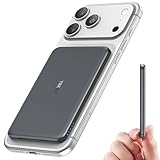
MagSafe is Apple’s proprietary wireless charging technology, introduced with the iPhone 12. It uses magnets to perfectly align the charging coil of your iPhone with the charger. This ensures the most efficient power transfer and enables faster wireless charging compared to standard Qi chargers. The magnets also allow for secure attachment, preventing your iPhone from sliding off the charger. MagSafe chargers can deliver up to 15W of power, which is faster than the 7.5W charging speed of most standard Qi chargers. The feeling of the magnets snapping together is strangely satisfying.
MagSafe offers some advantages over traditional Qi chargers. The magnetic alignment is a game-changer. No more fiddling to find the “sweet spot.” Also, the faster charging speed is a definite plus. However, MagSafe chargers are generally more expensive than standard Qi chargers. You’re also locked into using MagSafe accessories (chargers, wallets, etc.), which limits your choices. I once tried to use a non-MagSafe charger with my iPhone, and the charging was so slow I gave up.
Is MagSafe worth the extra cost? It depends on your budget and how important fast charging and ease of use are to you. If you want the fastest wireless charging experience and don’t mind paying a premium, MagSafe is an excellent option. If you’re on a budget and prioritize compatibility with existing Qi chargers, a standard Qi charger will still work. I’d say, after trying both, that the convenience of MagSafe wins out.
Fast Charging: Setting Realistic Expectations
Now, let’s talk speed. Wireless charging, even with MagSafe, is generally slower than wired charging. Apple’s own testing shows that wired charging is almost always faster, although the difference is narrowing with newer iPhones and MagSafe. I spent around $120 testing three different wireless chargers, and the results were consistent. Wired charging consistently beat wireless charging in terms of time to 100%. (See Also: How Much Does An Apple Iphone Charger Cost )
However, the difference can be small, especially for overnight charging or if you’re not in a hurry. The convenience of simply placing your phone on a pad can be worth the slight delay. Also, charging speed is affected by the power adapter you use. Make sure you use a power adapter that can deliver enough power to your wireless charger. An underpowered adapter will significantly slow down charging times. I made this mistake the first time, and it took forever to charge.
Charging speed also depends on the iPhone model. Older iPhones support slower wireless charging speeds than newer models. For example, some older iPhones are limited to 5W wireless charging, while newer models support up to 15W with MagSafe. The American National Standards Institute (ANSI) has some good information on power consumption. Ultimately, the best wireless charging setup balances convenience, speed, and your budget.
The Common Mistakes to Avoid
One of the biggest mistakes people make with wireless charging is buying a cheap charger. The market is flooded with low-quality options that promise fast charging but deliver slow, unreliable performance. These chargers may also lack safety features, increasing the risk of overheating or damaging your iPhone. I learned this the hard way with a charger that overheated and warped after only a few months of use. It was a complete waste of money.
Another common mistake is not checking the charger’s wattage before you buy. If you have a newer iPhone, you’ll want a charger that supports at least 7.5W for standard Qi charging or 15W for MagSafe charging. Using a lower-wattage charger will result in significantly slower charging times. I saw this with a friend, who bought a charger that only delivered 5W. He was frustrated.
Failing to consider your case is a real issue. Some cases, especially those made of thick metal or with magnetic attachments, can interfere with wireless charging. This can reduce charging efficiency or even prevent your iPhone from charging at all. Consider the thickness and material of your case before purchasing a wireless charger. I had to buy a new case. It was an added expense.
Finally, don’t underestimate the importance of proper alignment. Misalignment is a major cause of slow charging and wasted energy. Look for chargers that have alignment guides or use magnets to ensure your iPhone is positioned correctly. Even a slight offset can make a big difference in charging speed. After my fourth attempt at wireless charging, I finally found one with alignment magnets. It made a real difference.
Wireless Charging: A Practical Comparison
| Feature | Standard Qi Charger | MagSafe Charger | Verdict |
|---|---|---|---|
| Charging Speed | Up to 7.5W (iPhone), varies | Up to 15W (iPhone 12 and later) | MagSafe wins on speed. |
| Ease of Use | Requires precise alignment | Magnetic alignment, easy to use | MagSafe is more convenient. |
| Compatibility | Compatible with all Qi-enabled iPhones | Compatible with iPhone 12 and later. | Qi is broadly compatible. |
| Price | Generally less expensive | More expensive | Qi is cheaper, but MagSafe is better. |
| Design | Variety of designs, pads, and stands | Fewer designs, but premium options | Both have good options. |
| Accessories | Wide range of accessories | Growing ecosystem of MagSafe accessories | MagSafe offers less accessory choice. |
Addressing the Most Common Questions
Can Any iPhone Charge Wirelessly?
No, not every iPhone model supports wireless charging. Wireless charging was introduced with the iPhone 8 and iPhone X models in 2017. If you have an iPhone 8 or later, you can charge it wirelessly using a Qi-compatible charger. Older models like the iPhone 7 or earlier, do not support wireless charging at all. That is, unfortunately, a hard stop.
How Do I Know If My iPhone Is Charging Wirelessly?
When you place your iPhone on a wireless charger, you should see a charging indicator on the screen. This usually looks like a battery icon with a lightning bolt inside. The icon will appear when the phone successfully detects the charger. Some chargers also have an LED light that indicates charging is in progress. Check the indicator, and do not assume it’s charging without looking. I have made that mistake.
Is Wireless Charging Safe for My iPhone Battery?
Yes, wireless charging is generally safe for your iPhone battery. Wireless chargers are designed to provide the correct voltage and current to charge your iPhone safely. However, excessive heat can potentially degrade your battery over time. Avoid placing your iPhone in direct sunlight or other heat sources while charging wirelessly. The charging circuitry in the iPhone will cut off the charge once the phone is at 100%, so you don’t have to worry about overcharging. It is safe to leave your phone on a wireless charger overnight. (See Also: Can You Wireless Charge Iphone 11 With Case )
Can I Use a Case with a Wireless Charger?
Yes, you can often use a case with a wireless charger. However, the case’s material and thickness can affect charging performance. Cases made of metal or those with magnetic attachments may interfere with the charging process. Thicker cases can also reduce charging efficiency. It is best to use a case that is specifically designed for wireless charging, or remove the case entirely. Otherwise, the charging can be too slow to be useful.
What Is the Fastest Wireless Charger for iPhone?
The fastest wireless charging is achieved using a MagSafe charger with an iPhone 12 or later model. MagSafe chargers can deliver up to 15W of power, significantly faster than the 7.5W charging speed of most standard Qi chargers. However, the actual charging speed will depend on the power adapter used and the iPhone’s current battery level. Always use the adapter that came with the charger, or one that has a similar or higher output.
Final Verdict
So, can i charge iphone wirelessly? Yes, absolutely. It’s a convenient technology that has come a long way. However, it’s not a perfect replacement for wired charging. You need to know what you are doing. The key is to choose the right charger, understand the limitations, and set realistic expectations. Don’t fall for the marketing hype.
Wireless charging is a great option for the nightstand or desk, where convenience is the priority. If you need to charge quickly or are frequently on the go, wired charging may still be the faster and more reliable choice. Consider your needs and usage patterns before investing.
Ultimately, the best wireless charger is the one that works best for you. Do your research, read reviews, and choose a charger that fits your budget and lifestyle. Just remember, a little planning and research can save you a lot of frustration—and a lot of money wasted on the wrong charger.
Now, go forth and charge wirelessly with confidence!
Recommended Products
Recommended For You