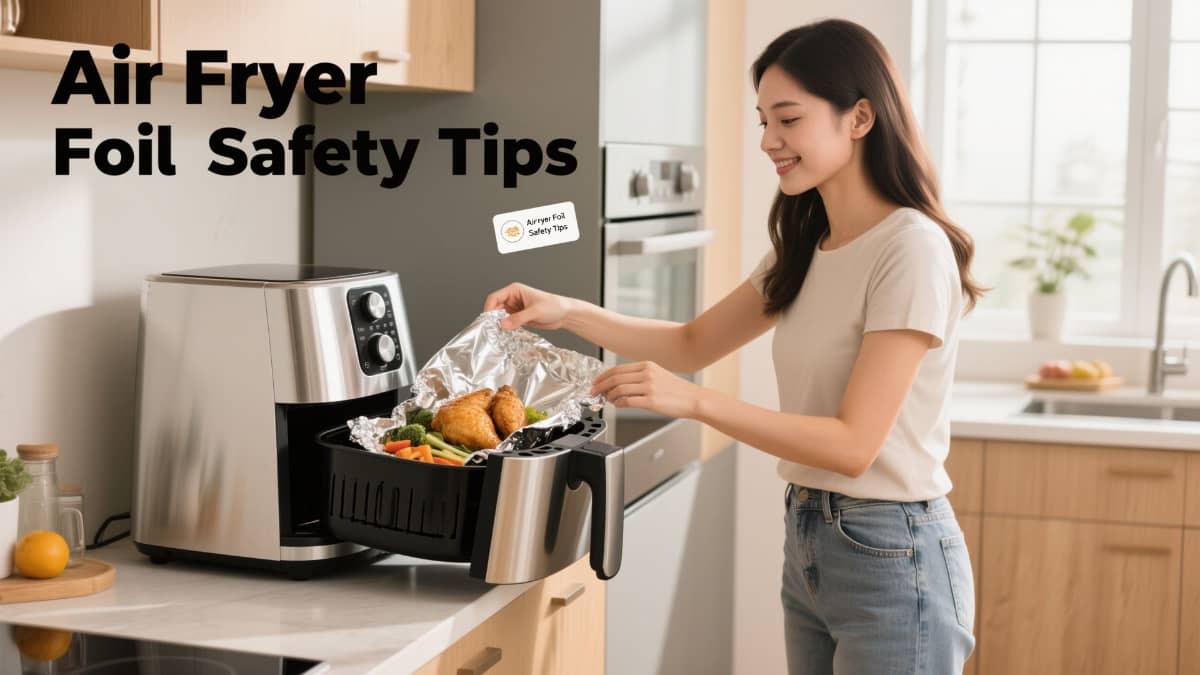
You did it. You joined the air fryer revolution. You’ve unboxed that shiny new appliance, and you’re already dreaming of perfectly crisp fries and juicy chicken wings. But as you start exploring recipes, a practical question pops into your head, a question whispered on forums like Reddit and in countless kitchens: Can you put foil in an air fryer?
Let’s clear the air right away: Yes, you can.
However, using aluminum foil in your air fryer isn’t as simple as tearing off a sheet and tossing it in. Your air fryer is a powerful machine, and using foil correctly is the key to delicious food and a long-lasting appliance. This guide will walk you through the dos and don’ts so you can cook with confidence.
Understanding Your Air Fryer’s Superpower
Before we get into the rules, you need to understand why they exist. An air fryer doesn’t just get hot; it creates a tiny, powerful hurricane of superheated air that swirls around your food. This constant circulation is what gives you that signature crispy, “fried” texture without all the oil.
Anything that gets in the way of that airflow is your enemy. The goal is to use foil as a helpful tool, not as a barrier that stops the magic from happening.
The Golden Rules for Using Foil Safely
Think of these four rules as your non-negotiable handbook for using foil. Follow them every time, and you’ll get great results.
Rule #1: Don’t Build a Dam (Let the Air Flow!)
The most common mistake is laying a solid sheet of foil across the entire bottom of the air fryer basket. This is a bad idea. When you do this, you’re essentially building a dam that blocks the hot air from circulating underneath your food. The result? A soggy, steamed bottom and a cooked top—not the crispy goodness you were hoping for.
The Fix: Cut a piece of foil that is only slightly larger than the food itself. Or, even better, place your food in the basket and then slide a small “sling” of foil underneath it. This leaves plenty of room around the edges for that hot air to do its job.
Rule #2: Give it Some Weight (No Flying Foil!)
That fan inside your air fryer is no joke. A loose, lightweight piece of foil can get whisked up by the air current and fly directly into the heating element. This is a recipe for disaster. At best, it can melt onto the element and ruin your appliance. At worst, foil can catch fire in an air fryer if it makes contact with that red-hot coil.
The Fix: Never, ever preheat your air fryer with an empty piece of foil in it. The foil must always be weighed down securely by your food before you turn the power on.
Rule #3: Stick to the Basket
It might seem clever to line the bottom drawer (the part the basket sits in) to catch drips. Don’t do it. This area also needs airflow to function properly. Covering it can trap heat and grease, creating a smoky, hazardous mess.
The Fix: Foil belongs inside the cooking basket only, directly under your food.
Rule #4: Watch Out for Acidic Foods
Here’s a quick science lesson. What foods should you never cook in foil? Highly acidic ingredients like tomatoes, citrus marinades (lemon and lime), and heavy vinegar-based sauces can have a chemical reaction with aluminum. This can cause tiny flecks of the foil to leach into your food, leaving an unpleasant metallic taste.
The Fix: For super acidic dishes, it’s better to use a small, air-fryer-safe ceramic or silicone dish. Or, consider the foil alternative.
The Great Debate: Parchment Paper or Aluminum Foil in Air Fryer?
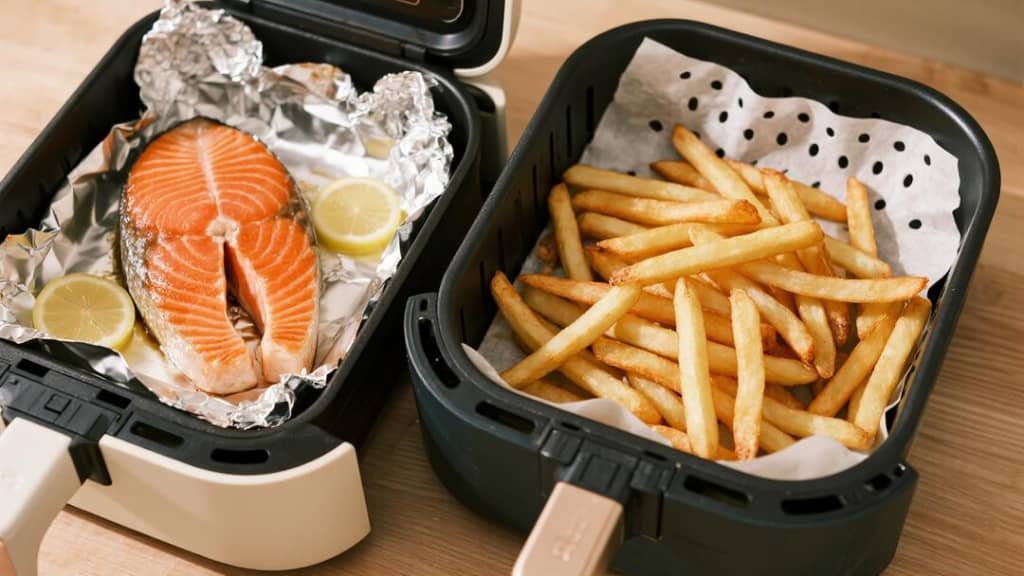
This is a common crossroads for air fryer users. Is it better to use foil or parchment paper in an air fryer? The truth is, they both have their strengths.
- Choose Aluminum Foil When… you need to contain liquids. If you want to wrap fish in foil in the air fryer to steam it in a lemon-herb sauce or cook saucy chicken wings, foil creates a perfect, sealed packet that locks in moisture.
- Choose Parchment Paper When… you want maximum crispiness. You can buy special air fryer parchment liners that already have holes in them. These holes allow for optimal airflow while still preventing food from sticking, making them perfect for breaded items, fries, and cookies.
The choice between parchment paper or aluminum foil in an air fryer simply depends on your cooking goal: moisture or crispiness.
Your Burning Questions Answered (FAQ)
Is using foil in an air fryer actually safe?
Yes, it is completely safe when you follow the golden rules outlined above. The main dangers—fire or damage—come from using it incorrectly, specifically by letting it fly loose or blocking the essential airflow.
What about specific brands? Can you put foil in a Ninja air fryer?
Yes! The rules are based on how air fryers work in general, not on a specific brand. Whether you want to put foil in an air fryer Ninja brand, a Philips, a Cosori, or an air fryer oven, the principles of airflow and safety remain exactly the same. Always check your specific model’s manual if you’re unsure.
Can I wrap chicken in foil in my air fryer?
You sure can! If you want to put foil in an air fryer for chicken, wrapping a chicken breast in a foil packet with herbs and a little butter is a fantastic way to keep it incredibly moist.
How long does it take to cook chicken in foil in an air fryer?
For a 6-ounce boneless, skinless chicken breast, a good starting point is 20-25 minutes at 375°F (190°C). The most important thing is to use a meat thermometer to ensure the internal temperature reaches a safe 165°F (74°C).
Wait, isn’t foil in an appliance dangerous? What about a microwave?
This is a great question. You should never put foil in a microwave. Microwaves use electromagnetic waves that cause metal to spark and catch fire. An air fryer, like a conventional oven, uses a heating element and a fan. That’s why you can put aluminum foil in an oven and an air fryer, but not a microwave.
Final Thought
The answer to the big question: Can you put foil in an air fryer? Resounding yes, as long as you do it smartly. By respecting the power of your appliance and its need for airflow, you can use aluminum foil to make cooking more versatile and cleanup a whole lot easier. Now go enjoy that perfectly cooked meal