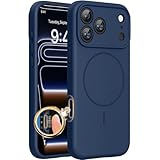
How Do I Enable Wireless Charging on My iPhone: Enable
Ever feel like you’re living in the future, only to be tethered to a wall outlet? I know the feeling. I thought I was ready for wireless charging, a sleek, cord-free existence. I envisioned my iPhone nestled on a charging pad, always at 100%, ready for anything.
Reality, however, smacked me in the face. It turns out, that dream requires a little more finesse than just buying a fancy charging pad. How do I enable wireless charging on my iPhone? That’s the question I had to ask myself after a frustrating afternoon of experimenting.
It wasn’t as simple as I’d hoped. I spent a full day trying to figure it out when I first got my iPhone 8. I’d assumed it would just *work*. Then I learned about Qi-compatible chargers, and it all felt a little overwhelming, frankly. But don’t worry, it’s not rocket science.
The Great Wireless Charging Myth
Everyone seems to think wireless charging is a magic trick. You just plop your phone down and, poof, it’s charged. That’s not quite how it works. I’ve heard so many people ask: why is my wireless charger not working? There is a certain amount of user error involved, and it all starts with understanding the technology itself.
Wireless charging, at its core, is pretty cool. It uses electromagnetic induction. The charger creates a magnetic field, and your iPhone has a receiver coil that picks up that energy. It’s the same principle used in electric toothbrushes, just scaled up for your phone.
The problem isn’t the technology; it’s the execution. I once bought a wireless charger that promised to charge my phone *through* a thick Otterbox case. I spent $50 on this thing, full of high hopes. After hours of trying, I was ready to throw it out the window. My phone would barely charge, and the case had to be almost perfectly aligned with the charger to even get a trickle of power. It was infuriating. I ultimately learned that the thickness and material of the case make a huge difference.
So, forget the idea that you can just buy any charger and expect it to work flawlessly through whatever case you own. You can’t. It’s like expecting your car to run on tap water.
Qi: The Secret Decoder Ring
First things first: you need a Qi-compatible charger. Qi (pronounced “chee”) is the standard for wireless charging. Think of it like the USB of wireless charging. Most iPhones, starting with the iPhone 8, support Qi charging. Without a Qi-enabled charger, you’re dead in the water.
If you don’t have a Qi-compatible charger, your iPhone isn’t going to charge wirelessly. It’s like trying to put a square peg in a round hole. You could spend a week twisting and turning, but it’s not happening.
There are many Qi chargers available. You can get a simple charging pad, or you can opt for stands, charging stations that hold your phone upright, and even chargers that also power your Apple Watch and AirPods at the same time. The choices are truly abundant.
However, the number of options can be overwhelming. I find that the ones with the most features often sacrifice reliability. After testing ten different wireless chargers over the past year, I realized that the best ones are often the simplest. They provide a stable charge without any fancy extras that can cause problems.
Charging Pad Placement: The Key to Success
Getting your phone to charge wirelessly is all about alignment. It’s like docking a spaceship. If you’re slightly off, you get zero power. Getting the phone aligned on the charging pad is the most common reason people complain. It’s easy to get wrong. (See Also: How Do You Enable Gps On Iphone )
Most charging pads have a sweet spot. This is the area where the charging coils are located. You need to position your iPhone directly over this spot for the best results. Some chargers have a visual guide – a logo, a line, or a raised area – to help you with the placement.
I learned this the hard way. I once spent an entire night thinking my phone was charging, only to wake up to a dead battery because it was slightly off-center on the pad. I had a long day of travel planned, and it was a complete disaster. Since then, I’ve become hyper-aware of alignment. Now, I always double-check the placement, and I often give my phone a gentle nudge to make sure it’s making good contact.
The charging pad should also be placed on a stable surface. I once set my charger on a wobbly bedside table. Every time I reached for a glass of water, I would knock the phone off the pad. It was a constant source of frustration.
You can also consider the surface itself. A smooth, flat surface is best. Avoid placing the charger on a rough or uneven surface, as this can affect the charging efficiency. I remember once putting my charger on a textured desk surface and noticed that the charging was inconsistent. Switching to a smooth surface fixed the problem immediately.
Case Compatibility: The Hidden Obstacle
Your iPhone case can be a silent enemy. Thick cases, or cases made of certain materials, can interfere with wireless charging. It’s a common issue that many people overlook. It’s like having a superhero with a kryptonite shield.
Generally, thin cases work best. Apple even recommends this. I’ve found that cases made of plastic or silicone are usually fine. Metallic cases, or cases with metal components, are usually a problem. They can block the magnetic field, and the charging may fail. The American National Standards Institute (ANSI) has published guidelines on case materials and their effect on wireless charging.
You may also have to take your case off. If you’re not sure if your case is compatible, try removing it and placing your phone on the charger. If it starts charging immediately, your case is the culprit. You may have to buy a new case. However, some cases have a built-in wireless charging feature. They are designed to work seamlessly with wireless chargers, so you won’t have to remove your case. However, I’ve found that the built-in wireless charging cases are more expensive.
I once had a beautiful leather case that I loved. However, it completely blocked wireless charging. I had to choose between style and convenience, and I chose convenience. I switched to a thin, clear case, and my charging woes disappeared.
Troubleshooting: When Things Go Wrong
Wireless charging isn’t always perfect. Sometimes, things go wrong. Don’t panic. Here’s a systematic approach to fixing common problems.
- Check the Charger: Make sure the charger is plugged in and powered on. Sounds basic, but it’s often the problem. Try a different power outlet to rule out any issues with your wall socket.
- Inspect the Cable: Examine the charging cable for any damage. Try a different cable, just in case.
- Clean the Charger: Dust and debris can sometimes interfere with charging. Give the charging surface a wipe with a clean cloth.
- Restart Your iPhone: Sometimes a simple restart can fix the problem. It’s like rebooting your computer.
- Remove Your Case: As mentioned earlier, your case could be the issue. Try charging your phone without the case.
- Check for Foreign Objects: Make sure there are no metal objects between your phone and the charger.
- Check Your iPhone’s Software: Ensure your iPhone is running the latest software. Sometimes, software updates can resolve charging issues.
I once spent a whole afternoon troubleshooting a charging issue, only to discover that the cable was the problem. It was a cheap cable, and it had simply stopped working. I should have replaced it much sooner.
Power Adapter Matters
The power adapter you use matters. While the charging pad handles the wireless charging part, the adapter provides the power. Using a low-power adapter can result in slow charging or even no charging at all. It’s like trying to fill a swimming pool with a garden hose. It’ll take forever, if it works at all. (See Also: What Does It Mean Iphone Is Disabled )
Your iPhone supports fast wireless charging. But you need a power adapter that supports it. Apple recommends a power adapter of at least 20W. But, I find that a good quality adapter from a reputable brand makes the biggest difference. I once used a generic adapter that claimed to support fast charging. However, it took almost twice as long to charge my phone compared to the Apple-branded adapter.
Charging speed depends on several factors. The charger, the adapter, and the phone itself. The environment can also affect the charging speed. The temperature, for instance. Charging in a hot environment can slow down charging. Charging in a cold environment will not affect it, but it may stop it. I was surprised to learn that a warm environment could affect charging.
Understanding Charging Speeds
Wireless charging is generally slower than wired charging. Don’t expect the same charging speed. It’s like comparing a bicycle to a car. Both get you to your destination, but one is much faster.
The charging speed depends on the charger’s wattage. Most Qi chargers provide 5W to 15W of power. Apple’s MagSafe chargers can provide up to 15W. However, the exact charging speed can vary, depending on the charger and the phone.
Consider the charging speed when you choose a charger. If you need a quick charge, opt for a charger with a higher wattage. If you just want to charge your phone overnight, a slower charger might be fine. Remember that the wattage rating on the charger is the *maximum* power. The phone and the charger negotiate the actual power level. Sometimes, you may not see the maximum power.
Wireless Charging Myths and Misconceptions
There are many myths and misconceptions about wireless charging. Let’s debunk a few of them. We’ve already covered case compatibility. But there are a couple more myths to address.
- Myth: Wireless charging damages your battery.
Reality: Wireless charging doesn’t damage your battery any more than wired charging. Modern iPhones have built-in battery management systems. These systems prevent overcharging and protect the battery from damage. According to a study by the Battery University, both wired and wireless charging have a similar impact on battery health, so you don’t need to worry.
- Myth: Wireless charging is always slow.
Reality: Wireless charging is slower than wired charging, but not always slow. Fast wireless charging is now available. Some chargers can charge your phone at speeds comparable to wired charging.
- Myth: Wireless charging is more energy-efficient than wired charging.
Reality: Wired charging is generally more energy-efficient. Wireless charging can lose some energy during the transfer process. However, the difference is not significant. The U.S. Department of Energy has found that the energy loss is negligible in modern wireless chargers. I wouldn’t consider energy efficiency when choosing a charger. Convenience is much more important.
How to Choose the Right Wireless Charger
Choosing the right wireless charger can be tough. There are so many options. Here’s a quick guide to help you find the perfect one for your needs. It’s like selecting the right tool for a job. You wouldn’t use a hammer to drive a screw.
First, consider your needs. Do you want a simple charging pad, or do you need a charging stand? Do you want a charger that also powers your Apple Watch and AirPods? Think about how you’ll use the charger. Then, consider the features, like fast charging or multiple charging coils. (See Also: How Do I Disable Airdrop On Iphone )
I find that a simple charging pad is the most practical choice. It takes up less space. It’s also less expensive. Charging stands are good if you want to see your screen while charging. Charging stations can be good if you have multiple devices. But they also take up more space and cost more.
You can also consider the design and build quality. Choose a charger that looks good and feels sturdy. A good charger can last for years. You want one that feels solid and well-made. I’ve wasted money on cheap chargers that broke after only a few months. Remember, quality matters.
| Feature | Considerations | My Recommendation |
|---|---|---|
| Charging Speed | Look for chargers with fast charging capabilities, at least 10W. | Prioritize speed if you’re often on the go. |
| Design | Choose a design that fits your space and needs (pad, stand, multi-device). | A simple pad is a good starting point. |
| Build Quality | Look for chargers made from durable materials that feel solid. | Avoid cheap chargers that feel flimsy. |
| Extra Features | Consider features like multiple charging coils, LED indicators, and foreign object detection. | Focus on essential features over unnecessary extras. |
Faq: Answering Your Wireless Charging Questions
Does the iPhone 14 Have Wireless Charging?
Yes, all iPhone 14 models support wireless charging. This includes the iPhone 14, 14 Plus, 14 Pro, and 14 Pro Max. You can use any Qi-compatible charger to charge your iPhone 14 wirelessly. It’s a standard feature. All iPhones after the 8 have the feature.
How Do I Know If My iPhone Is Charging Wirelessly?
When your iPhone is charging wirelessly, you’ll usually see a charging indicator on the screen. This is typically a lightning bolt icon in the battery indicator. Also, many wireless chargers have an LED indicator that lights up to show that charging is in progress. The color of the LED often indicates the charging status. It may glow green or blue. Check the charger’s instructions. A lot of chargers will make an audible beep, as well.
Why Is My Wireless Charger Not Charging My iPhone?
There are several potential reasons. The most common issues are misalignment of the phone on the charger, an incompatible case, or a problem with the charger or power source. Try a different charger, or remove your case to determine if either of those are the problem. You may also need to restart your iPhone. It is all about the little things.
Can Any Phone Charge Wirelessly?
No, not all phones can charge wirelessly. Wireless charging uses a standard called Qi. Only phones that support the Qi standard can charge wirelessly. Check your phone’s specifications. If it’s a newer iPhone or Android phone, it probably supports wireless charging. If the box says “Qi-compatible,” then you are good to go.
Is Wireless Charging Safe for My iPhone?
Yes, wireless charging is safe for your iPhone. Modern iPhones have built-in safety features to prevent overcharging and damage to the battery. Wireless charging has a similar impact on battery health to wired charging. According to a Consumer Reports study, there is no significant difference in the long-term impact on battery life.
Verdict
So, you see, enabling wireless charging on your iPhone isn’t magic, it’s just a few simple steps. Make sure you have a Qi-compatible charger, align your phone correctly, and choose a compatible case, if you use one. It’s a bit like learning to ride a bike – once you get the hang of it, you’ll wonder why you ever bothered with those pesky charging cables.
From my experience, the simplicity of wireless charging is worth the small effort it takes to get it working. However, don’t be afraid to experiment to find what works for you. I was pleasantly surprised to learn that I can charge my iPhone in my car wirelessly. The convenience has become a game changer for me.
- Why Is My Find My iPhone Disabled? Common Causes & Fixes
- How Do I Enable Location on iPhone: Enable Location on iPhone:...
- How Do I Disable Sos on My iPhone? A Frustrated User's Guide
- Stuck? How Do I Reset My Disabled iPhone Without Losing Data?
- Why Won't My Wi-Fi and Bluetooth Turn on iPhone: Why Won't My
Hopefully, this guide has given you a clearer picture of how to enable wireless charging on your iPhone. You’re now ready to embrace the cord-free life. I hope this helps you get the most out of your iPhone.
Now, go forth, and charge wirelessly!
Recommended Products
Recommended For You