Unraveling: How Do Wireless iPhone Chargers Work?
I remember the first time I got a wireless charger. I was so excited to ditch the Lightning cable that always seemed to get tangled. It promised a future of effortless charging — a sleek pad, a phone that just *knew* what to do. Honestly, it felt like something out of a sci-fi movie.
Then reality hit. My expensive new charger barely worked. The phone had to be perfectly aligned, and even then, it charged slower than a sloth on a caffeine crash. I later learned that the wattage of the charger I purchased was not high enough for my newer iPhone model, and what I thought was a convenient upgrade was more like an overpriced paperweight. I felt so foolish.
But the dream of wireless charging stuck with me, and since then, I have learned a thing or two about how do wireless iphone chargers work. It’s not magic, but it’s a clever bit of tech that’s worth understanding if you want to make the most of it.
Let’s dive in.
The Basics: Induction and the Invisible Energy Highway
So, how do wireless iphone chargers work? It all comes down to something called inductive charging, a process that uses electromagnetic fields to transfer energy between two objects. Think of it like a tiny, invisible highway for electricity. Instead of electricity zipping through a cable, it hops across a small gap.
A wireless charger, whether it’s for your iPhone or any other Qi-compatible device, has a coil of wire inside it. When you plug the charger into a power source, this coil creates a fluctuating magnetic field. Your iPhone also has a coil inside, usually near the back. When the phone is placed on the charger, the magnetic field from the charger’s coil interacts with the coil in your phone. This interaction generates an electrical current in your phone’s coil, which then charges the battery.
That’s the basic science, but it’s a little more nuanced in practice. This process is most efficient when the coils are perfectly aligned, which is why you often need to carefully position your phone on the charging pad. Misalignment means less efficient energy transfer and potentially slower charging speeds.
For instance, I once bought a wireless charger that had a built-in stand. Sounded perfect, right? The idea was that I could see my phone while it charged. The reality, however, was frustrating. The stand made it even harder to ensure perfect coil alignment. I constantly had to adjust my phone, and it often slipped, stopping the charge. I ended up returning it after a week, chalking it up to a design fail.
Qi: The Universal Language of Wireless Charging
The term ‘Qi’ (pronounced ‘chee’) is thrown around a lot when discussing wireless chargers. It’s not just a fancy name; it’s a standard developed by the Wireless Power Consortium (WPC). Think of it like the USB of wireless charging.
Qi ensures that your iPhone can communicate with a wide range of chargers, regardless of the brand. This interoperability is a huge win for consumers because it means you’re not locked into buying chargers from a single manufacturer. You can mix and match. You can upgrade. The WPC, like the Underwriters Laboratories (UL) for electrical safety, sets guidelines for safety, efficiency, and compatibility. This helps protect your devices. (See Also: Can You Charge Iphone 13 With Lightning Cable )
But not all Qi chargers are created equal. You’ll see different wattage ratings, which directly impact charging speed. Apple’s iPhones support different charging speeds depending on the model and the charger. Make sure your charger supports the wattage your phone requires. You could end up with a charger that tops your phone off at a snail’s pace.
Furthermore, the Qi standard is always evolving. Apple’s latest iPhones are compatible with the latest version of the Qi standard, which supports faster charging speeds and improved efficiency. As an example, I own an iPhone 14 Pro Max. To get the maximum charging speed, I had to ensure I was using a charger that supported 15W charging, while also having a power adapter that delivered enough power. Initially, I used an older charger, which would only deliver 7.5W, which was half the speed. I felt like I wasted money on the phone because of the limitations of the charger.
It’s also worth noting that the Qi standard isn’t just for iPhones. Many Android phones, wireless earbuds, and other devices also use Qi, making it a truly universal standard in a way that feels different from other proprietary tech.
Wattage Wars: Why Faster Isn’t Always Better
One of the biggest misunderstandings about wireless charging revolves around wattage. Everyone wants the fastest charge, right? Well, not always. You see a charger advertised as 15W, and you think, “Great, faster charging!” But it’s a little more complex.
While higher wattage chargers can deliver faster charging speeds, your iPhone has its own built-in limits. Apple designs its phones to manage heat and battery health. They are designed to manage the flow of electricity to protect the phone’s long-term health. Pushing too much power into the battery too quickly can generate heat, which is the enemy of battery life.
I remember one time when I purchased a super-fast charger promising to juice up my phone in record time. It was a 25W charger and I was so excited. While it did charge my phone a bit faster than the 7.5W charger I owned, I noticed my iPhone got noticeably warmer. After about six months, I noticed my battery life wasn’t as good as it used to be. It seemed like the fast charging was slowly degrading the battery. I switched back to a slower charger, and the battery life improved. That was a costly lesson.
For most iPhones, 7.5W or 10W is a sweet spot for wireless charging. Anything faster, and you may not see a huge difference in charging speed, but you could potentially put more stress on your battery.
Then again, faster charging can be useful. It can be a lifesaver when you are in a time crunch. If you’re in a real hurry, a faster charger might be worth it. However, the best approach is to weigh the convenience of speed against the potential impact on your battery’s lifespan.
Here’s a table to show the rough compatibility of different iPhone models and wireless charging wattages: (See Also: How Much Does An Apple Iphone Charger Cost )
| iPhone Model | Wireless Charging Speed (Watts) | My Opinion |
|---|---|---|
| iPhone 8 – iPhone X | 7.5W | Perfectly fine for overnight charging. |
| iPhone XS – iPhone 11 | 7.5W | Good, but not super fast. |
| iPhone 12 – iPhone 13 | 15W (with MagSafe) / 7.5W (Qi) | MagSafe is a game changer for charging speed and alignment. |
| iPhone 14 – iPhone 15 | 15W (with MagSafe) / 7.5W (Qi) | MagSafe continues to be a great choice. |
As you can see, the best approach to choosing the right charger for your iPhone is to understand your specific needs. Think about how you use your phone, how often you charge it, and how much you prioritize speed versus battery longevity.
Magsafe: Apple’s Take on Wireless Charging
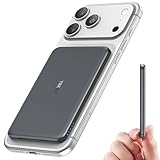
Apple hasn’t just embraced Qi; they’ve also introduced their own magnetic charging system called MagSafe. This is the exception to the rule. MagSafe chargers use magnets to perfectly align the charging coil in your iPhone with the coil in the charger. This ensures maximum efficiency and faster charging speeds than standard Qi chargers, at least for some iPhone models.
MagSafe offers a satisfying ‘snap’ when the charger connects to your phone. It feels secure. I love the feedback. It’s a subtle but significant difference from the sometimes finicky alignment of regular wireless chargers. Furthermore, MagSafe is not just for chargers. Apple and other third-party manufacturers make MagSafe accessories like wallets, car mounts, and battery packs that magnetically attach to your phone. It’s a whole ecosystem.
However, MagSafe isn’t without its downsides. MagSafe chargers are generally more expensive than standard Qi chargers. Also, MagSafe is proprietary to Apple, meaning it only works with iPhones (and some iPads). So, if you have other devices that need wireless charging, like Android phones or wireless earbuds, you’ll still need a standard Qi charger.
Here’s my personal experience: after my third attempt at trying different wireless chargers, I decided to take the plunge and buy a MagSafe charger. I wanted to see if the hype was real. I was skeptical. I ended up loving it! The alignment was perfect, and the charging speed was noticeably faster. In my experience, the premium was worth it.
Troubleshooting: When Wireless Charging Goes Wrong
Wireless charging should be convenient, but it can be frustrating when it doesn’t work as expected. Here are some common issues and how to solve them.
- Alignment Problems: This is the most common issue. Make sure your phone is centered on the charging pad. Check the charger’s indicator light (if it has one) to see if it’s charging.
- Case Compatibility: Some phone cases can interfere with wireless charging. Thick cases or those made of metal may block the magnetic field. Try removing your case or using a case specifically designed for wireless charging.
- Wattage Mismatch: As mentioned earlier, make sure your charger provides the appropriate wattage for your phone. If your charger is too slow, it will charge your phone very slowly.
- Foreign Object Detection: Some chargers have a safety feature that detects foreign objects (like coins or keys) on the charging pad. Remove any objects that might be interfering.
- Overheating: Excessive heat can stop charging or damage your battery. Make sure the charger is in a well-ventilated area. If your phone gets too hot, stop charging and let it cool down.
- Software Glitches: Occasionally, software bugs can cause charging issues. Make sure your iPhone is running the latest version of iOS.
These troubleshooting tips can help you resolve most issues.
Faq: Answering Your Wireless Charging Questions
Can Any iPhone Use Wireless Charging?
Yes, any iPhone 8 or later model supports wireless charging using the Qi standard. This means you can use a wide variety of wireless chargers with your device. Even older iPhones such as the iPhone 8 and the iPhone X are able to charge wirelessly, though at a slower rate than newer models.
Is Wireless Charging Safe for My iPhone?
Yes, wireless charging is generally safe for your iPhone. Wireless chargers are designed with safety features to prevent overcharging and overheating. However, always use chargers from reputable brands and follow the manufacturer’s instructions. According to a report by the WPC, properly designed and certified Qi chargers pose no risk to your device. (See Also: Can You Wireless Charge Iphone 11 With Case )
Does Wireless Charging Drain the Battery Faster?
Wireless charging can sometimes generate more heat than wired charging, which can potentially impact battery health over time. However, the difference is often minimal, especially with modern chargers and iPhones. Use a charger with the recommended wattage for your model. It is best practice to avoid chargers that get extremely hot.
Can I Use a Wireless Charger with Any Phone Case?
No, not all phone cases are compatible with wireless charging. Thick cases, metal cases, and cases with metal attachments can interfere with the magnetic field and prevent charging. Generally, cases designed for wireless charging are thin and made of non-metallic materials.
Why Is My iPhone Charging So Slowly on a Wireless Charger?
Slow charging can be caused by several factors, including misalignment, a low-wattage charger, or a case that’s interfering with the magnetic field. Make sure your phone is correctly positioned, use a charger that supports the appropriate wattage for your phone, and remove any potentially interfering cases or objects.
Final Verdict
So, there you have it – the basics of how do wireless iphone chargers work, along with some real-world advice to help you get the most out of them. It’s a convenient technology, but the key is choosing the right charger and understanding its limitations.
Consider this: before you buy your next wireless charger, take a quick look at your charging habits. Do you need speed, or do you prioritize battery health? Do you have a MagSafe-compatible iPhone?
Make the right choice. You will be glad you did.
Recommended Products
Recommended For You