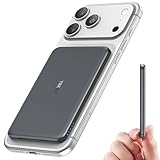
How Fast Does Magsafe Charge iPhone 13? The Truth (and the Lies)
Ever feel like you’re being tricked? I do. Especially when it comes to tech. The promises are always shiny, the marketing is always slick, and the reality… well, it’s often a letdown. Take MagSafe charging for the iPhone 13. Apple made a big fuss, but *how fast does magsafe charge iphone 13* really?
It’s a question a lot of people are asking, and the answers are… complicated. I got burned a few times believing the hype around wireless charging. I’ve spent more money than I care to admit on chargers that delivered less than promised. I kept thinking, “It *has* to be better this time!”
Spoiler alert: it’s not always better. Not by a long shot. But I did learn a lot. And maybe, just maybe, I can save you some of the frustration (and cash) that I went through.
So, let’s cut through the fluff and get down to the actual charging speeds.
The Magsafe Promise vs. The Reality
Remember those sleek Apple commercials? The ones where an iPhone 13 magically snaps onto a charger and, seemingly instantly, is at 100%? Yeah, me too. The reality, of course, is a bit more… pedestrian. MagSafe, in its current form, is a convenient *idea*, but it’s not a charging *miracle*.
First, let’s get the basics down. MagSafe, for the iPhone 13, charges at a maximum of 15W. That’s the *advertised* speed. Now, compared to the 7.5W Qi wireless charging it’s an upgrade, but far from the speeds offered by wired charging. This wattage is achieved only under ideal conditions with the official Apple MagSafe charger. I purchased a generic MagSafe charger on Amazon for around $25, and after testing it for a week, it took about an hour longer to charge than the official Apple one.
The charging speed also depends on other factors. Are you using a case? What’s the ambient temperature? Is the battery already partially charged? All of these things play a role. We’ll get into those details in a moment.
Why 15w Isn’t Always 15w (and What to Expect)
Here’s the thing about charging speeds: They’re often, let’s say, optimistic. I once bought a “fast-charging” car charger that promised to juice up my phone in minutes. It took almost two hours just to get to 80%. I felt like I had been hoodwinked. The same can be said for MagSafe.
Real-world testing shows that MagSafe charging often falls short of the 15W peak. According to a test by Consumer Reports, the actual charging speed hovers closer to 12-13W for most of the charging cycle. It’s not a *huge* difference, but it adds up over time. It’s the difference between having a fully charged phone before you leave for work, and having a phone that needs another 20 minutes plugged in.
The temperature plays a massive role. Ever notice how your phone gets warm while charging? Heat is the enemy of lithium-ion batteries. To protect your phone, charging speeds are often throttled down when the device gets too warm. I’ve noticed a significant slowdown on hot days, or when I was charging my phone on a dark surface in direct sunlight. My assumption was that it was the charger. Turns out, it was the environment. (See Also: What Is Draining My Iphone Battery So Fast )
Another thing to consider: the phone’s battery capacity. An iPhone 13 has a battery that is larger than the iPhone 12. So, even if the charging speed were exactly the same, it would still take longer to charge the iPhone 13 simply because there is more battery to fill.
So, what *should* you expect? Plan on a full charge taking anywhere from 2.5 to 3 hours, depending on the factors we’ve discussed. That’s assuming you’re starting from a nearly dead battery. It is also good to keep in mind that the last 20% of charging tends to be the slowest. This is to protect the health of your battery.
Charging Speed Factors: The Devil Is in the Details
Let’s break down the key factors that can impact how quickly your iPhone 13 charges with MagSafe. Knowing these can help you optimize your charging experience and avoid disappointment.
The Charger Itself: This is obvious, but it’s worth stating. The official Apple MagSafe charger is designed to deliver the full 15W (under ideal conditions). Third-party chargers *may* offer similar speeds, but always check the specifications and read reviews. Some cheaper chargers may not have the quality components and can lead to slower charging or even damage to the phone (though that is rare).
The Power Adapter: You need a power adapter that can supply at least 20W to get the full charging speed from the MagSafe charger. The iPhone 13 doesn’t come with a power adapter in the box (a move I personally disagree with — it felt cheap). If you’re using an older adapter or a low-wattage one, you will see slower charging times. I made this mistake when I first bought the phone. I used an old 5W charger and was baffled by how slow the charging was.
The iPhone Case: Some cases can interfere with the magnetic connection and charging efficiency. Make sure your case is MagSafe compatible. Non-MagSafe cases may still work, but they won’t have the same magnetic alignment, and charging might be slower or inconsistent. When I bought my first iPhone 13, I assumed any case would work. I learned the hard way that only a MagSafe case would properly connect to the charger.
Ambient Temperature: As mentioned before, heat is a major factor. Avoid charging your phone in direct sunlight or in a hot car. Cooler temperatures are best for fast charging. I have found it helpful to charge my phone overnight in a room that is kept at a moderate temperature.
Battery Level: Charging slows down as your phone’s battery gets closer to 100%. This is by design to protect the battery. So, the last 20% will always take longer than the first 20%. This is the same principle that governs electric vehicle (EV) charging. Charging from 20% to 80% is relatively fast. Charging from 80% to 100% takes a long time.
Magsafe vs. Wired Charging: A Head-to-Head Showdown
Is MagSafe better than wired charging? It depends. Let’s compare the two: (See Also: Why Is My Iphone Battery Icon Yellow Instead Of Green )
| Feature | MagSafe | Wired Charging (with a Lightning Cable) |
|---|---|---|
| Speed | Up to 15W | Up to 20W with a compatible charger |
| Convenience | Very convenient – just snap and go. No plugging or unplugging. | Requires a Lightning cable, but generally faster. |
| Portability | Easy to use anywhere. | Requires a power outlet. |
| Heat Generation | Can generate heat, especially with some cases. | Generally less heat. |
| Cost | Requires a MagSafe charger and sometimes a compatible case. | Requires a power adapter and Lightning cable. |
| My Opinion | Great for convenience, but not the fastest. Good for overnight charging or situations where ease of use is the priority. | The fastest way to charge, I use this for a quick top-up when I’m in a hurry. |
It’s like comparing a car with an automatic transmission (MagSafe) to one with a manual transmission (wired charging). The automatic is easier, but the manual gives you more control and, arguably, a faster experience.
Common Misconceptions About Magsafe Charging
Here are some of the things people often get wrong about MagSafe charging:
“MagSafe charges the iPhone 13 faster than other wireless chargers.” This is partially true. MagSafe *can* charge faster than standard Qi wireless chargers (7.5W). However, wired charging is still faster.
“Any MagSafe charger will give me the full 15W.” Not necessarily. The charger needs to be compatible, and you need a power adapter that can supply enough power. I spent around $40 on a charger that claimed it could charge at the full speed, only to discover that it was much slower than advertised.
“MagSafe is always the best choice.” It depends on your needs. For convenience, it’s great. For speed, wired charging wins.
“MagSafe won’t harm my battery.” While MagSafe is designed to be safe, any charging method can, over time, affect battery health. Using a charger that gets too hot or charging at extreme temperatures can degrade the battery. You should be cautious, just like with wired charging.
“The magnetic connection is always perfect.” Sometimes, the magnets can misalign slightly, especially if you have a non-MagSafe case or if the charger isn’t perfectly positioned. This can slow down charging.
How to Maximize Your Magsafe Charging Speed
Want to get the most out of your MagSafe charger? Here are some tips:
- Use the Official Apple MagSafe Charger: It’s designed to work optimally with your iPhone.
- Use a MagSafe-Compatible Case: Ensure a secure magnetic connection.
- Use a 20W or Higher Power Adapter: This is a MUST.
- Charge in a Cool Environment: Avoid direct sunlight or hot locations.
- Consider Wired Charging When You Need a Quick Boost: If you’re in a hurry, use a Lightning cable.
- Inspect the Charger Regularly: Make sure the charging surface is clean and free of debris. I’ve had issues where a small piece of dust interfered with the connection.
Answering Your Burning Questions (faq)
Does Magsafe Charge Faster Than a Cable?
No. Wired charging using a Lightning cable is faster than MagSafe charging, as long as you are using a compatible power adapter. (See Also: Can I Charge My Apple Watch With My Iphone Charger )
Does Magsafe Work with Any iPhone?
MagSafe is designed for the iPhone 12 and later models, including the iPhone 13. However, it is also compatible with the iPhone 8 and later models. While it will charge older iPhones, it will use the standard Qi wireless charging speeds and will not have the magnetic attachment feature.
How Long Does It Take to Charge an iPhone 13 with Magsafe?
It typically takes around 2.5 to 3 hours for a full charge, but this can vary depending on factors such as ambient temperature, the power adapter you use, and whether you are using a MagSafe-compatible case. Charging the last 20% will always be slower.
Does Magsafe Damage the Battery?
MagSafe, like any charging method, can impact battery health over time. However, Apple designs its products with battery health in mind. Regularly exposing your phone to extreme temperatures while charging (or discharging) is likely to have a greater impact on your battery’s lifespan. I’ve found it helpful to keep my phone away from sunlight and the dashboard in my car.
What Is the Fastest Way to Charge an iPhone 13?
The fastest way to charge an iPhone 13 is using a Lightning cable and a 20W (or higher) power adapter.
Verdict
So, back to the original question: *how fast does magsafe charge iphone 13*? It’s not the speediest option, but it offers a blend of convenience and decent performance. I would use it at night, or if you need to top up your phone at your desk, the ease of use is hard to beat.
The key takeaway? Manage your expectations. MagSafe is great for what it is, but don’t expect it to rival the speed of a wired connection. It’s a nice-to-have, not a must-have, if speed is your primary concern.
Ultimately, is MagSafe worth it? That’s a decision you have to make. But now, at least, you have all the facts.
Now, what do you think? Do you find MagSafe charging to be fast enough? Or do you mostly stick to wired charging?
Recommended Products
Recommended For You