How to Monitor Soil Health: A No-Nonsense Guide
Rain lashed against the greenhouse glass. Inside, my prize tomato seedlings were wilting, their leaves yellowing like an old newspaper. I’d been religiously feeding them this fancy organic liquid fertilizer, convinced I was giving them the best. Turns out, I was drowning them in nitrogen, totally ignoring what the actual soil beneath their roots was begging for. It was a gut punch. Four months of effort, wasted because I didn’t know how to monitor soil health properly.
That was my wake-up call. I spent probably $150 on those sad little plants and the snake oil I thought was helping. Honestly, most of the gardening advice out there is a fluffy mess of aspirational Instagram shots and products that promise miracles. You want to know what actually works? It’s understanding the dirt. And that starts with paying attention.
Forget the marketing jargon for a second. Getting your soil right isn’t rocket science, but it does require a bit of detective work. It’s about looking, feeling, smelling, and sometimes, just admitting you screwed up. This isn’t about perfection; it’s about progress. And it’s absolutely vital if you want anything to actually grow well.
The ‘feel-It-Out’ Method: Trust Your Gut (and Your Hands)
Honestly, before I even bothered with kits or fancy gadgets, I learned to just *feel* the dirt. It sounds ridiculously simple, right? But your hands can tell you a surprising amount. Grab a handful. Does it feel gritty like sand? Does it clump into a hard, sticky ball when wet, then bake into a brick? Or is it dark, crumbly, and smells faintly earthy, like a forest floor after rain? That smell, by the way, is a big indicator of beneficial microbes. A foul, sour smell? Probably waterlogged and anaerobic. A dusty, inert smell? Maybe dead soil.
My first gardening mentor, an old guy who’d been farming his whole life, would just walk through his fields, pick up a clod, and nod or frown. He could tell more from that than I could from a pH meter. He’d say, “If it feels like this, it needs more compost. If it’s too loose, we’re losing nutrients.” It’s a tactile language that speaks volumes about drainage, aeration, and organic matter content. I remember one time, my soil felt almost greasy after a rain. Turned out, it was compacted so badly, water was just sitting on top, suffocating the roots. A good few inches of compost and some broadfork work fixed it, but I only knew because I paid attention to how it *felt*.
Ph: The Big One Everyone Talks About (and Often Gets Wrong)
Okay, so the pH scale. Everyone harps on it. Too acidic, too alkaline – plants throw a fit. Most plants, the ones you’re probably trying to grow, like it somewhere between 6.0 and 7.0. It’s like Goldilocks’ porridge for plant roots – not too hot, not too cold, just right for them to slurp up all the good stuff from the soil. If your pH is way off, even if you’ve got all the nutrients in the world sitting there, the plants literally can’t access them. It’s like having a feast in front of you but being handcuffed to the table.
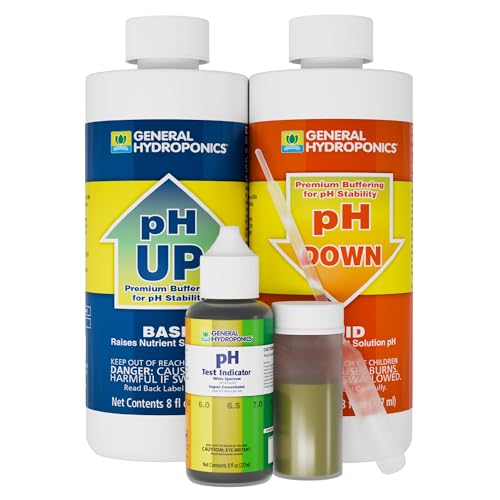
Everyone says you need a fancy pH meter or test strips. And sure, those can be useful. But honestly, I’ve found the little DIY kits you get at garden centers to be pretty darn accurate for home use. I bought a kit that cost me about $22, and it came with enough reagents for probably fifty tests. It involves mixing a soil sample with distilled water and a few drops of indicator solution. The color change tells you where you’re at. I test mine twice a year, once in spring before planting, and again in fall after harvest. This gives me a baseline. If I see things struggling, I’ll do an extra test mid-season. (See Also: How To Monitor Cloud Functions )
Here’s the contrarian bit: Everyone talks about amending soil to adjust pH. Add lime to raise it, sulfur to lower it. And yes, that’s sometimes necessary. BUT, a lot of the time, the pH issue is a *symptom*, not the root cause. If your soil is teeming with organic matter, if it’s healthy and alive, the pH will naturally tend to buffer itself and stay in a more stable range. Focusing solely on chemical adjustments without addressing the underlying soil biology is like constantly bailing out a boat with a hole in it. Feed the microbes, add compost, and your pH will often sort itself out. I’ve seen it happen too many times to ignore it.
Nutrient Levels: Are You Feeding Your Plants or Just the Weeds?
This is where people go completely off the rails. They see a plant looking a bit peaky and immediately grab the strongest fertilizer they can find. Usually, it’s a high-nitrogen blend because that’s what makes leaves look green *fast*. But that’s a short-term fix, and often, it’s the wrong fix entirely. You could have a severe potassium deficiency, and all that extra nitrogen is just going to make your plant spindly and weak, or worse, attract pests like aphids. It’s like trying to fix a car engine by just blasting it with a hose – messy and ineffective.
The best way to know what your soil *actually* needs is a soil test. Not the cheap little home kits for pH, but a proper lab test. You send them a sample, and they tell you the exact levels of N-P-K (nitrogen, phosphorus, potassium) and a whole host of micronutrients. The USDA offers soil testing services, and while they aren’t free, the cost is usually very reasonable, often less than $20 for a comprehensive report. It’s money well spent. I sent in a sample from my vegetable patch last year, and it told me I was practically swimming in nitrogen but dangerously low on magnesium. So, instead of buying another bottle of liquid feed, I bought a bag of Epsom salts. Sorted.
Here’s a breakdown of what those common nutrient tests usually tell you, and what it means for you:
| Nutrient | What it Does (Simplified) | Low Levels Might Cause… | My Verdict |
|---|---|---|---|
| Nitrogen (N) | Leaf growth, green color | Yellowing leaves, stunted growth | Everyone overdoes this. Easy to add via compost, but too much is bad. |
| Phosphorus (P) | Root development, flowering, fruiting | Poor root growth, delayed flowering | Often sufficient in compost. Lab tests are good here. Don’t just guess. |
| Potassium (K) | Overall plant vigor, disease resistance, water regulation | Weak stems, increased susceptibility to disease, poor fruit quality | Crucial for resilience. I add wood ash sparingly if levels are low. |
| Micronutrients (e.g., Iron, Magnesium, Zinc) | Various plant functions, enzyme activity | Specific deficiency symptoms (e.g., interveinal chlorosis for iron) | Lab tests are the ONLY way to reliably know these. Don’t just throw random ‘micronutrient’ blends at it. |
Getting a lab test takes the guesswork out of feeding your plants. You’re not just throwing fertilizer at the problem; you’re providing exactly what’s missing. It’s like getting a prescription from a doctor instead of just popping whatever pills are in the cabinet.
Structure and Drainage: The Unsung Heroes of Soil Health
You can have perfect pH and balanced nutrients, but if your soil is compacted and waterlogged, you’re still going to struggle. Think of soil structure like the framework of a building. You need good airflow, easy pathways for water to move (but not drain away *too* fast), and space for roots to stretch out. Tight, compacted soil is like trying to breathe through a straw. Plant roots suffocate, and beneficial organisms can’t move around. (See Also: How To Monitor Voice In Idsocrd )
A simple way to assess this is the percolation test. Dig a hole about a foot deep and a foot wide. Fill it with water and let it drain completely. Then, fill it again and time how long it takes for the water level to drop an inch. If it takes more than four hours, your drainage is poor. This happened to me in a raised bed I built. I used a bagged topsoil mix that was just too fine, and after a big rain, I had a mini-pond. The plants looked miserable. I ended up digging out half the bed and mixing in a significant amount of coarse compost and a bit of perlite to break up that density. It was back-breaking work, but the difference was night and day.
Healthy soil structure is often a result of high organic matter. When you add compost, earthworms and other soil fauna work it in, creating channels and aggregates. It’s a living, breathing system. That’s why I’m so down on just dumping synthetic fertilizers. They can actually degrade soil structure over time by killing off the beneficial microbes that do the heavy lifting. So, while you’re monitoring nutrients and pH, don’t forget to think about how the soil *behaves* when it’s wet and dry. That’s a huge part of how to monitor soil health effectively.
The Biological Component: Looking for Life
This is the part that most people completely overlook. They focus on the chemistry – pH, N-P-K – and forget that healthy soil is alive. It’s a teeming metropolis of bacteria, fungi, protozoa, nematodes, and earthworms. These microscopic and macroscopic creatures are the unsung heroes of nutrient cycling, disease suppression, and good soil structure. If your soil smells dead, looks lifeless, and doesn’t have any visible earthworms when you dig, you’ve got a problem.
You can’t really get a precise ‘reading’ on your soil biology without sending samples to a specialized lab, and frankly, that’s usually overkill for most home gardeners. The best approach is observation. Are there earthworms? Do you see fungal hyphae (those thin, white, web-like strands) in your compost or soil? Does the soil break down organic matter relatively quickly? These are all good signs. I remember finding a whole colony of ants one year in a particularly neglected corner of my yard; it told me the soil was likely compacted and lacking moisture, as ants often thrive in those conditions.
When I first started gardening, I was so focused on killing off any ‘pests’ that I probably killed off more of the good guys too. Over the years, I’ve shifted my approach dramatically. I use compost liberally, avoid tilling whenever possible, and use organic pest control methods that are less harmful to beneficial insects and soil microbes. It’s a commitment, but the payoff in terms of plant health and reduced need for intervention is huge. It’s like building a strong immune system for your garden, rather than just treating symptoms when they appear.
Faq Section
What Is the Most Important Factor in Soil Health?
While many factors contribute, the biological component is arguably the most foundational. Healthy soil is alive soil. A thriving microbial community drives nutrient cycling, improves soil structure, and helps suppress diseases. Without this biological activity, chemical balances become harder to maintain and plant health suffers. (See Also: How To Monitor Yellow Mustard )
How Often Should I Test My Soil?
For pH and basic nutrient levels, testing twice a year—once in spring and again in fall—is a good practice for most gardeners. If you’re experiencing persistent problems or making significant amendments, you might test more frequently. For a comprehensive lab test, once every 1-3 years is generally sufficient unless you notice issues.
Can I Improve My Soil Health Without Buying Anything?
Absolutely. The most impactful thing you can do is add organic matter, primarily through compost. Letting grass clippings or fallen leaves decompose on the soil surface also helps. Minimizing soil disturbance (like tilling) and planting cover crops are also free or low-cost ways to build soil health over time.
Final Thoughts
So, there you have it. It’s not a single magical test or product. Learning how to monitor soil health is a continuous process of observation and understanding. You’ve got your hands, your nose, simple tests, and the information from a lab. Use them. Pay attention to how the soil feels after a rain, not just what the weather forecast says.
Don’t be afraid to get your hands dirty. Honestly, the most valuable lessons I’ve learned about soil came from digging around, getting frustrated, and then finally figuring out what was actually going on beneath the surface. It’s a constant learning curve, and that’s part of the fun.
Keep observing, keep tinkering, and keep adding compost. That’s the real secret sauce. The plants will thank you for it, and you’ll spend less time wondering why they look like sad, wilted shadows of their potential selves.
Recommended For You