How to Play Audio with Monitor Without Built in Speakers
Honestly, this whole monitor audio thing is way more complicated than it needs to be. For years, I just assumed if a monitor didn’t have speakers, I was SOL. Then I blew a solid $150 on some dinky USB speakers that sounded worse than a tin can on a string, just for my secondary display. Total waste. It turns out, figuring out how to play audio with monitor without built in speakers isn’t some dark art, it’s just about knowing a couple of straightforward tricks. Most folks I talk to are still fumbling around with the wrong gear, thinking they need some fancy external soundbar. Nah, usually it’s much simpler. You’ve probably got what you need sitting around already.
Especially if you’re rocking a gaming setup or a workstation where the monitor is the star, but sound got left on the cutting room floor. I’ve been there, staring at a silent YouTube video or a game that sounds like it’s coming from another room because my monitor is just a pretty picture box. It’s frustrating, sure, but a quick fix is usually within reach. This guide cuts through the noise.
You’re not alone if you’re scratching your head about how to play audio with monitor without built in speakers. Many modern monitors are all about the visuals, leaving sound as an afterthought or an optional extra. Let’s sort that out so you’re not just watching things, you’re *experiencing* them.
My Stupid $150 Mistake: Don’t Buy Those Tiny USB Speakers
Look, I get it. You’ve got this gorgeous, massive monitor – maybe it’s 144Hz, 4K, the works. But when you boot up your PC, it’s dead silent. The obvious thought is, ‘Okay, I need speakers for this thing.’ So, I did what any slightly panicked tech enthusiast would do. I hit up Amazon, searched ‘monitor speakers,’ and bought the first decent-looking set that wasn’t ridiculously expensive. These were these little, slim, USB-powered things. They promised ‘crystal clear sound.’ Crystal clear, my left foot. They produced a sound so thin and reedy, I swear my phone’s built-in speaker was better. I tried them for about two weeks, feeling increasingly annoyed every time a notification dinged or a game started with a pathetic *thwack*. Finally, I realized I’d spent about $150 on something that brought me zero joy, just a constant reminder that I’d been suckered by marketing. That’s when I started digging deeper into what actually works, and why most people just end up buying more junk they don’t need.
The Obvious, but Often Overlooked, Solution: Your Existing Audio
Seriously, before you buy *anything* new, check what you already have. Most desktop PCs, even if your monitor is silent, still have audio ports. These are usually those little green, blue, or pink jacks on the back of your computer tower. If you’ve ever plugged in a wired headset, you’ve seen them. This is your primary audio output. The trick is getting that sound to where you can actually hear it. This means connecting speakers (or a soundbar) to your PC, *not* trying to force audio through the monitor itself if it has no speaker hardware. It’s like trying to get water out of a tap that has no pipes connected – it’s just not going to happen.
So, grab any set of powered speakers you might have lying around. These are usually the kind with a power cord and RCA or 3.5mm audio input jacks. Plug the 3.5mm cable into the green ‘line out’ or ‘audio out’ port on your PC. Then, plug the speaker’s power adapter into the wall. Boom. Instant sound. This is how I’ve run my secondary monitor setup for the last three years. It’s not fancy, but it works. The sound quality depends entirely on the speakers you connect, obviously. I’ve got a decent pair of Edifier bookshelf speakers hooked up to my main rig, and they’re fantastic for the price. They don’t connect to the monitor at all; they connect directly to the PC.
When Your Pc Doesn’t Have Those Old-School Jacks (yes, It Happens)
Alright, so you’ve got a super-modern, sleek PC, maybe a small form-factor build, and you can’t find those colorful audio jacks. Don’t panic. The next logical step is USB. Many external speakers, and even those soundbars designed for monitors, connect via USB. This is usually a ‘plug and play’ situation. Your computer recognizes the USB device, and the audio drivers are often loaded automatically. You might need to go into your sound settings in Windows or macOS to set the USB audio device as your default playback device, but it’s usually straightforward. (See Also: Will Roku Work On Pc Monitor )
Here’s where I went wrong the first time. I assumed *all* USB speakers would just work as audio output. Wrong. Some USB speakers are designed for power only, with their audio signal coming from a separate 3.5mm cable. Always check the product description. If it says ‘USB Audio,’ you’re probably golden. I spent a good hour troubleshooting one set that was purely powered by USB and needed a separate audio input – a classic case of me not reading the fine print when I was in a hurry. It was a frustrating evening, the kind where you start questioning your own sanity.
A more advanced, but often cleaner, solution is using an HDMI audio extractor. If your monitor has HDMI input and you’re using HDMI to connect your PC, the audio signal is traveling *to* the monitor. If the monitor has no speakers, that audio signal is essentially going nowhere. An HDMI audio extractor is a small box that sits between your PC and your monitor. It takes the HDMI signal, splits it, and allows you to pull the audio out via optical (Toslink), coaxial, or RCA (red and white) connectors. You then connect your speakers or soundbar to the extractor. This method is fantastic if you want to keep your desk tidy and avoid multiple cables running directly to your PC, especially if you’re dealing with multiple inputs.
The ‘digital Audio’ Route: Optical and Digital Coaxial
Some higher-end monitors *might* have digital audio outputs, or your PC might have them. Optical (Toslink) and Digital Coaxial are the common formats here. These transmit digital audio signals, which can be cleaner than analog. If you’re using a soundbar or AV receiver that supports these inputs, it’s a solid option. However, this is less common for the specific problem of ‘how to play audio with monitor without built in speakers’ because if the monitor *had* these outputs, it’s usually geared towards more robust audio setups anyway. Mostly, you’ll find these on the PC side. Connecting them is simple: a single cable from your PC’s digital out to your sound system’s digital in.
Bluetooth: The Wireless Option, with Caveats
Bluetooth is an obvious consideration for wireless convenience. Many modern speakers and soundbars are Bluetooth-enabled. The setup is usually as simple as putting your speakers or soundbar into pairing mode and then selecting them in your PC’s Bluetooth settings. The big caveat? Latency. Bluetooth audio, especially older versions, can have a noticeable delay between the video and the audio. For casual listening or watching videos, it’s often fine. But for gaming or any situation where precise timing is needed, that lag can be incredibly distracting, if not downright game-breaking. I tried Bluetooth for my secondary monitor setup initially, and the lip-sync issues were so bad I quickly switched back to a wired connection. So, while it’s an option for playing audio with monitor without built in speakers, it’s not always the best one for all use cases.
What About Headphones?
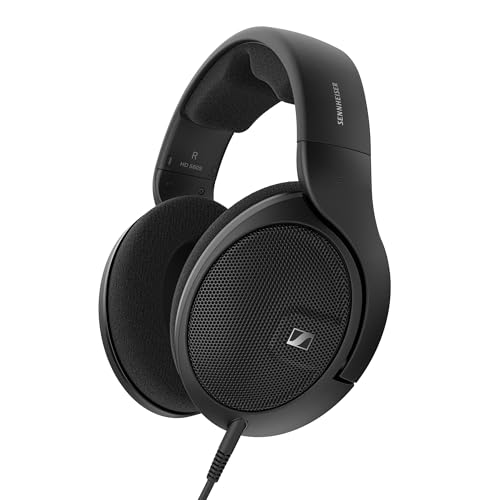
This is the simplest, most common solution when your monitor has no speakers, especially for personal listening or gaming. You plug your headphones directly into the headphone jack on your PC. Period. If your PC doesn’t have a convenient front-panel jack, the one on the back of the tower works just as well. Some monitors *do* have headphone jacks, but even if yours doesn’t, your PC is almost certainly the audio source. There’s no magic trick to get sound from the PC *to* the monitor’s headphone jack if the monitor doesn’t have one. So, PC -> Headphones is the path. For many people, this is all they need, and it avoids the whole ‘how to play audio with monitor without built in speakers’ dilemma entirely, albeit with less immersive sound.
Can I Get Audio *through* the Monitor’s Ports (even If No Speakers)?
This is where a lot of confusion happens. Some monitors have audio *output* ports (like a 3.5mm jack) even if they don’t have built-in speakers. This is a less common feature, but it exists. In this scenario, the monitor is acting as a pass-through device. It receives the audio signal via HDMI or DisplayPort, and then outputs it through its own audio jack. So, you would connect your PC to the monitor via HDMI or DisplayPort, and then connect your speakers or headphones to the monitor’s audio output jack. This is actually quite useful if your PC is far from your speakers or if you want to easily switch audio sources by just unplugging from the monitor. I had one monitor like this, and it made cable management a breeze. It’s important to note, though, that not all monitors with an audio *input* signal necessarily have an audio *output* jack. (See Also: How To Mount Monitor With No Screw Holes )
A Quick Note on Displayport Audio
DisplayPort, like HDMI, also carries an audio signal. If your PC and monitor support it, you can get audio through a DisplayPort connection. However, just like HDMI, if the monitor has no speakers, that audio signal is just… there. It won’t magically create sound. You still need to connect external speakers or headphones to your PC (or potentially to the monitor if it has an audio out jack, which is rare with DP). The advantage of DP for audio is that it’s often higher bandwidth, though for standard stereo audio, it makes little practical difference compared to HDMI.
Table: Common Audio Solutions for Speakerless Monitors
| Method | Pros | Cons | My Verdict |
|---|---|---|---|
| Direct PC Connection (3.5mm/USB) | Simple, widely compatible, best latency. | Requires cables to PC. |
The go-to. Reliable, zero fuss for most setups. If your PC has the ports, use this. |
| HDMI Audio Extractor | Clean cable management, good for HDMI setups, high-quality audio extraction. | Extra device needed, potential for signal degradation (rare). |
Excellent if you want to tidy up and are using HDMI. Worth the small cost. |
| Bluetooth | Wireless convenience. | Potential latency issues, can be less stable. |
Okay for casual use, but avoid for gaming or critical listening. Not my favorite for this problem. |
| Monitor Audio Out (if available) | Centralized audio connection point, good for desk tidiness. | Rare feature, depends entirely on the monitor. |
Fantastic if your monitor has it. A real hidden gem when present. |
People Also Ask
Do I Need Speakers If My Monitor Has an Audio Output Jack?
Yes, you still need speakers or headphones. The audio output jack on the monitor is just a way to get the sound signal *out* of the monitor and *to* a separate listening device. It doesn’t produce any sound itself. Think of it like a water spigot on a hose reel – the water can come out, but you need to connect the hose to actually use it. (See Also: How To Switch Laptop Display To Monitor )
Can I Use My Monitor’s USB Ports for Speakers?
Some monitor USB ports are designed for speakers or other peripherals that require both power and data. However, many monitor USB ports are only for charging devices or acting as a USB hub for other peripherals connected to your PC. Always check your monitor’s manual or specifications to see if its USB ports support audio output or if they are solely for data transfer or charging.
Why Is My Monitor Not Playing Sound Through HDMI?
There are a few reasons. First, ensure both your PC’s graphics card and your monitor support audio over HDMI. Second, check your PC’s sound settings and make sure the HDMI audio output is selected as the default playback device. Third, the audio signal might not be enabled in your monitor’s OSD (On-Screen Display) settings. Sometimes, it’s as simple as selecting the correct input on the monitor, though that’s more for video than audio recognition.
What Is an HDMI Audio Extractor for?
An HDMI audio extractor is a device that takes an HDMI cable connection and splits the video and audio signals. It allows you to send the video signal to your monitor or TV, while simultaneously extracting the audio signal to be sent to a separate sound system, soundbar, or even headphones via optical, coaxial, or RCA outputs. It’s useful when your display device (like a monitor without speakers) can receive the video but you want to use a different audio setup.
Is There a Difference Between Monitor Audio Input and Output?
Yes, a big one. Audio input on a monitor means it can receive an audio signal (usually via HDMI or DisplayPort) to potentially play through built-in speakers or pass through an output jack. Audio output on a monitor means it can send a sound signal *from* the monitor to external speakers or headphones, often regardless of how the initial audio signal got into the monitor. Most monitors that *lack* built-in speakers also lack an audio output jack; they just receive the audio signal and ignore it if there are no speakers.
Final Thoughts
So, the whole ordeal of how to play audio with monitor without built in speakers boils down to understanding that your monitor is usually just a visual display, and your PC is the actual sound source. Don’t get fooled into buying overpriced gadgets that promise the moon and deliver static. Most of the time, you can use speakers you already own, connecting them directly to your computer.
If your PC is a bit more modern and lacks those classic audio ports, a simple USB connection will almost always do the trick. For the truly tidy setups, an HDMI audio extractor is a clean solution, especially if you’re already running video over HDMI. I learned the hard way that the simplest answer is often the right one, and that fancy-sounding tech isn’t always better.
Honestly, the biggest takeaway is this: if your monitor has no speakers, it’s not designed to *create* sound. It’s just a display. Your PC is where the audio lives. Figure out how to get that audio from your PC to your ears using an existing set of speakers or headphones. That’s how you solve how to play audio with monitor without built in speakers without wasting a dime on snake oil.
Recommended For You