
Welcome to the enchanting world of air plants! These unique botanical wonders, known scientifically as Tillandsia, have skyrocketed in popularity for their minimalist charm and soil-free existence. Their ability to thrive without being potted makes them incredibly versatile for home decor, from elegant terrariums to rustic driftwood displays. However, this very characteristic often leaves new owners scratching their heads and asking the all-important question: “How exactly do I water this thing?”
If you’ve found yourself puzzled by the hydration needs of your airy companions, you’re not alone, and you’ve come to the right place. This guide will completely demystify the process of watering air plants. We will explore everything from the best type of water to use to the most effective watering techniques and schedules. Prepare to transform from a nervous novice into a confident air plant caretaker.
Getting to Know Your Air Plant’s Natural Thirst
The first secret to successful air plant watering is to understand that “air plant” is a broad term. There are hundreds of different species, and their watering needs are directly linked to the environments they originally came from. By looking at your plant’s physical traits, you can get clues about its native habitat and how it prefers to be watered. Generally, we can group them into two main categories: xeric and mesic.
Xeric Air Plants: The Sun-Worshippers from Dry Climates
Xeric air plants are native to arid, desert-like regions. To survive in these dry conditions, they evolved some incredible adaptations. You’ll often recognize them by their distinct silvery or gray-white appearance. This look comes from a dense covering of fuzzy white scales called trichomes. These trichomes are multi-purpose marvels; they help reflect intense sunlight, shield the plant from drying winds, and efficiently capture moisture and nutrients directly from the air.
Because they are adapted to conserve water, xeric varieties require less frequent watering. Common examples you might encounter include the majestic Tillandsia xerographica, the fuzzy Tillandsia tectorum, and the tendriled Tillandsia caput-medusae.
Mesic Air Plants: The Lush Lovers of Humidity
In contrast, mesic air plants hail from the humid, moisture-rich environments of Central and South American rainforests. They typically have a greener, smoother, and more vibrant appearance, with fewer visible trichomes. Their sleeker leaves are designed to absorb moisture readily from the consistently damp air and frequent rainfall in their native jungle canopies.
These tropical beauties appreciate more regular watering than their xeric relatives. Popular mesic varieties include the spiky Tillandsia ionantha, the bulbous Tillandsia bulbosa, and the colorful Tillandsia brachycaulos.
The Right Kind of Water for Healthy Air Plants
The quality of the water you provide is just as critical as the watering method itself. Since air plants absorb water and all their essential nutrients directly through their leaves, the water you use is their main food source.
What Water Should You Use?
- Rainwater: This is the gold standard. It’s naturally soft, slightly acidic, and contains trace nutrients that are perfect for Tillandsia. If you can, collect some rainwater for your plants.
- Pond, Lake, or Aquarium Water: Water from these sources is teeming with natural minerals and organic nutrients that air plants adore. If you have a fish tank, use the old water during a water change.
- Tap Water (with a little patience): Tap water is convenient, but it often contains chlorine and other chemicals that can be harsh on air plants, potentially causing leaf burn or brown tips. To make it safe, simply let it sit in an open container for at least 24 hours. This allows the chlorine to evaporate.
- Filtered or Bottled Water: If your tap water is particularly hard (high in minerals), using filtered water or bottled spring water is a good alternative.
What Water Should You Avoid?
- Distilled Water: Avoid this at all costs. The distillation process removes all minerals. This ultra-pure water can actually leach nutrients out of your plant’s leaves through osmosis, effectively starving it over time.
- Softened Water: Do not use water that has passed through a home water softener. These systems work by adding sodium salts to the water, which will build up on the leaves and can be toxic to your air plants.
Mastering the Art of Watering: Different Methods for Different Needs
There are a few tried-and-true methods for watering your air plants. The best choice for you will depend on the type of plants you have, the humidity level in your home, and your personal schedule.
The Soaking Method: A Deep, Hydrating Drink
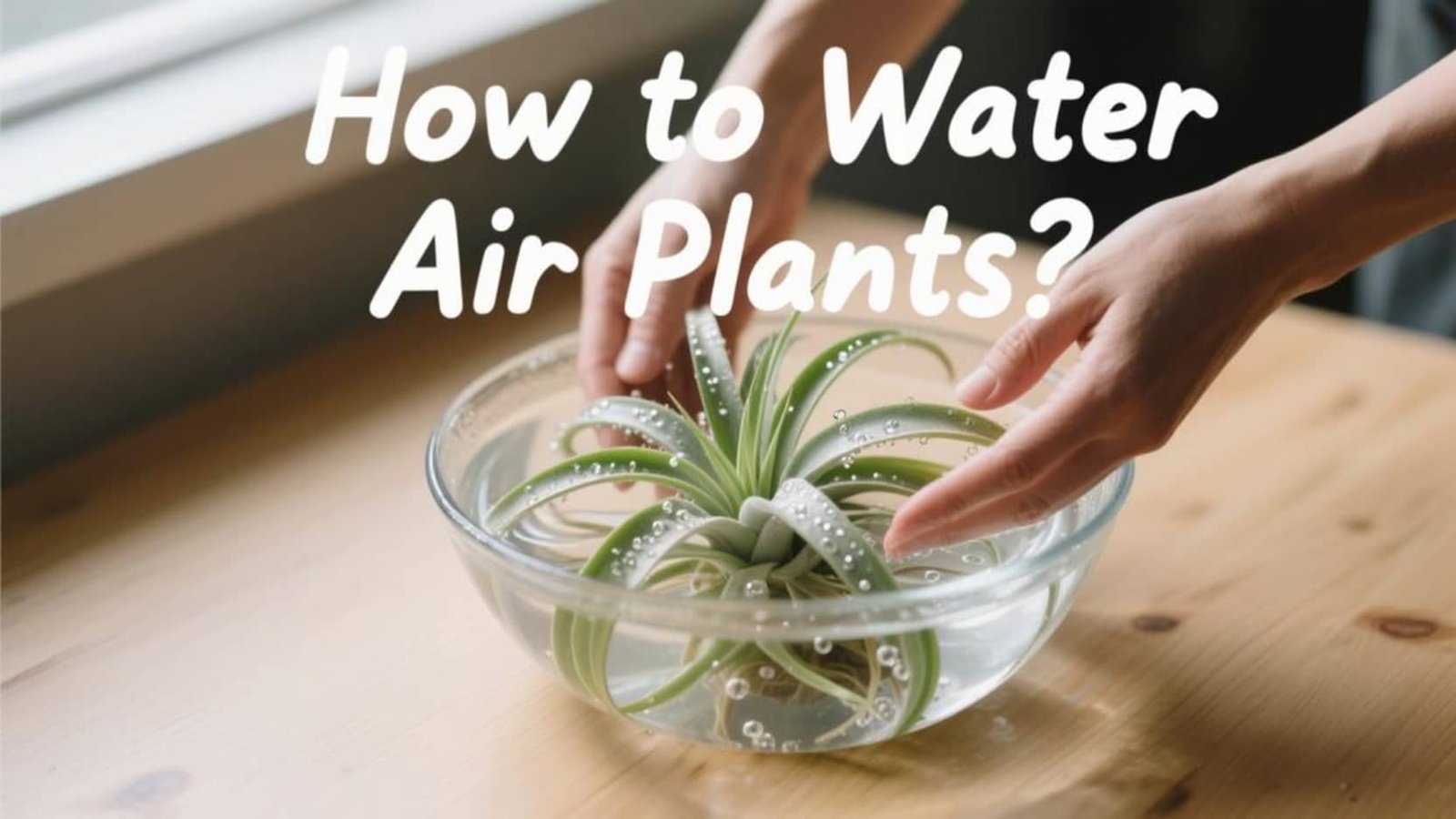
For most air plant owners, soaking is the most reliable and thorough way to ensure their plants get the moisture they need. This method mimics a heavy, drenching rainstorm and allows every part of the plant to absorb water fully.
A Step-by-Step Guide to Soaking Your Air Plants
- Prepare the Bath: Find a bowl, basin, or sink deep enough to completely submerge your plants. Fill it with room-temperature water.
- Let Them Soak: Place your air plants face down in the water and let them float for about 20 to 60 minutes. A weekly soak is a good starting point for most mesic varieties. Xeric plants may only need a soak every other week.
- Gently Shake It Out: After the soak, take each plant out and give it a gentle shake. This helps to dislodge any water trapped in the tight spaces at the base of the leaves.
- The Critical Drying Step: This is the most important part of the process! Place your air plants upside down on a drying rack or a towel in a location with bright, indirect light and good air circulation. They must be able to dry completely within four hours. Leaving a plant wet for too long is the primary cause of rot, which is fatal. A small fan on a low setting can help accelerate drying.
The Misting Method: A Quick and Refreshing Spritz
Misting can be a good way to provide supplemental humidity, especially in dry homes or during winter when heating systems are running. However, it’s crucial to understand that for the majority of air plants, misting alone does not provide deep enough hydration for long-term survival. Think of it as a helpful snack between main meals.
How to Mist Your Plants Effectively
- Get a Fine Mist Sprayer: Use a spray bottle that can produce a fine, even mist rather than large droplets.
- Spray Generously: Lightly mist your plants until their leaves are thoroughly damp, but not dripping. Make sure to spray the entire plant, including the undersides of the leaves where many of the trichomes are located.
- Misting Frequency: If you’re misting to supplement weekly soaks, a few times a week is usually adequate. For some xeric species that prefer to stay drier, thorough misting 2-3 times a week might be their primary watering method.
The Dunking Method: A Quick Plunge and Go
Dunking is a great middle-ground between soaking and misting. It’s faster than a full soak but more thorough than a light mist. This method works well for those with many plants or for drought-tolerant xeric types.
How to Dunk Your Air Plants:
- Prepare Your Water: Fill a container with your chosen plant-safe water.
- Dip and Repeat: Submerge the plant completely in the water a few times in quick succession.
- Shake and Dry: Just like with soaking, give it a gentle shake to remove excess water and let it dry completely in a well-ventilated spot.
Establishing a Watering Schedule: How Often is Enough?
There is no single, one-size-fits-all answer to how often you should water. It’s a dynamic process that depends on four key factors:
- Plant Type: As we’ve learned, mesic (greener) plants need more frequent watering than xeric (silver/fuzzy) plants.
- Light: The more bright, indirect light your plant receives, the faster it will use water (photosynthesize) and dry out. Plants in brighter spots need more water.
- Temperature & Humidity: Hotter temperatures and lower humidity will cause your plants to dry out much faster. You’ll need to water more often in a dry, warm environment than in a cool, humid one.
- Season: Plants may need more water during their active growing season (spring and summer). In winter, while they may need less frequent deep soaks, indoor heating can dry the air, making occasional misting beneficial.
As a general starting point, plan to water your air plants about once a week. From there, observe your plants closely. They will give you clear signals when they are thirsty.
Learning the Language of Your Plant: Overwatering vs. Underwatering
Your air plant will communicate its needs to you. Learning to interpret its signals is the key to becoming a successful air plant parent.
Signs of an Underwatered (Thirsty) Air Plant:
- Concave or Curled Leaves: The leaves will start to curl inward along their length, becoming more concave.
- Dry or Brown Leaf Tips: The tips of the leaves will become brown and feel crispy.
- Lackluster Color: The plant may lose its vibrancy and appear dull.
- Softness: A dehydrated plant will feel lighter and less firm.
Signs of an Overwatered (Drowning) Air Plant:
- Mushy, Soft Base: This is the most critical sign of rot. If the base of the plant feels soft and squishy, it’s in trouble.
- Dark or Black Base: The base of the leaves will turn dark brown or black as the tissue begins to decay.
- Yellowing Leaves: While it can signal other issues, yellowing leaves often indicate stress from too much moisture.
- Center Leaves Fall Out: If you can gently tug on the center leaves and they pull out easily, rot has likely set in.
It cannot be stressed enough: overwatering is the most common reason air plants die. The danger isn’t the amount of water during a soak, but the failure to allow the plant to dry out completely afterward.
Special Watering Situations
How to Water a Blooming Air Plant
An air plant in bloom is a beautiful sight, but it requires a slight change in your watering routine. The plant is using a lot of energy, so it may need more frequent watering. However, the flower itself is very delicate. Getting it wet can cause it to rot or fade prematurely.
The best method is to carefully hold the plant and soak only its leafy parts, keeping the flower stalk and bloom completely out of the water. Alternatively, you can switch to thorough misting of the leaves only until the bloom has faded.
How to Water Mounted Air Plants
If your Tillandsia is glued or wired to a piece of driftwood, cork, or another decorative mount, soaking can be impractical. For these displays, you can hold the entire piece under a running faucet for a minute or two, ensuring the plant gets thoroughly rinsed. Do this 2 to 4 times a week. Then, make sure you hang or place it in a way that allows the plant to dry fully, with no water pooling in its base. Thorough misting 3 to 7 times a week is another option.
Final Thoughts
Watering air plants doesn’t need to be a source of anxiety. It’s a simple rhythm you learn with your plants. By understanding where your plant comes from, providing it with good quality water, and mastering the soak-and-dry technique, you have all the tools you need for success. The most important advice is to observe. Look at your plants, touch them, and learn their unique language. With a little consistent care and attention, you will be rewarded with the unique, long-lasting beauty of these incredible soil-free specimens.
Frequently Asked Questions (FAQ)
Is it okay to use tap water for my air plants?
Yes, you generally can, but it is highly recommended that you let it sit out in an open container for 24 hours first. This allows chlorine, which can be damaging, to evaporate. Never use water from a water softener, as the added salt can be fatal to your plant.
Should I be misting or soaking my air plants?
For most air plant species, soaking is the superior method because it guarantees thorough and even hydration. Misting is best used as a supplemental technique to increase humidity between soaks, especially in dry environments, but it is rarely enough on its own.
How do I water an air plant that’s in a terrarium?
You should always remove your air plant from its terrarium for watering. The enclosed environment of a terrarium traps moisture and has poor air circulation, which is the perfect recipe for rot. After you soak your plant, let it dry completely—for at least four hours—before returning it to the terrarium.
What should I do if I think I’ve overwatered my air plant?
Act quickly. If you notice a mushy, dark base, try to save the plant by gently pulling off any rotten outer leaves. If there are salvageable “pups” (baby plants) attached, you can try to separate them. Place the plant in a location with very good air circulation, and use a fan if possible, to help it dry out as fast as possible. Unfortunately, if the core of the plant has rotted, it is often too late to save it.
How can I tell for sure if my air plant is dead?
An air plant that has succumbed to rot will feel mushy at its base and will often fall apart when you handle it. The center leaves will pull out with no resistance. An air plant that has died from dehydration will be completely dry, stiff, and brittle. It will show no signs of life—like plumping up or turning greener—even after a prolonged soak.