Knka Aph4000 Air Purifier Review
Breathing cleaner air at home is no longer a luxury but a necessity, especially with rising concerns about indoor air quality. Allergens, pet dander, dust, and even volatile organic compounds (VOCs) can significantly impact our health and well-being. The KNKA Air Purifier for Home Bedroom Large Room, model APH4000, emerges as a compelling solution designed to tackle these challenges head-on. This review delves into its capabilities, features, and overall performance to help you determine if it’s the right choice for your living space.
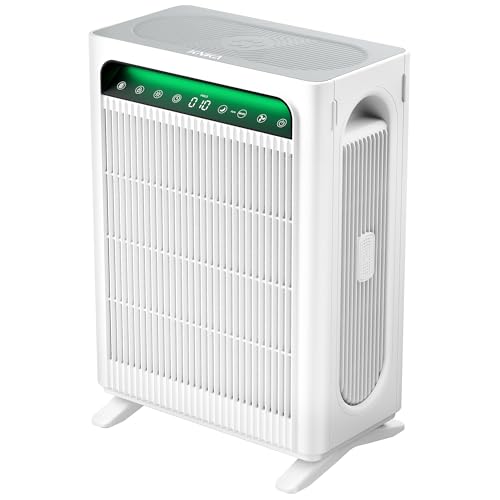
Engineered for efficiency and user convenience, the APH4000 boasts an impressive coverage area, promising to purify large rooms quickly. Its advanced filtration system, coupled with intelligent modes and a user-friendly interface, aims to deliver a noticeable improvement in air quality. We will explore its technical specifications, examine its core functionalities, and assess its suitability for various household needs, including those with pets and allergies. Prepare to discover how the KNKA APH4000 can transform your home environment.
The journey to a healthier home begins with understanding the tools available. The KNKA APH4000 presents itself as a robust appliance, ready to combat airborne pollutants. Its design emphasizes both effectiveness and ease of use, making it accessible for a wide range of consumers. This comprehensive review will guide you through its features, helping you make an informed decision about investing in this air purification technology. We aim to provide an unbiased perspective, highlighting its strengths and potential areas for consideration.
| Model | APH4000 |
| Coverage Area | Up to 1,695 Ft² |
| Filtration System | HEPA with Washable Pre-Filter |
| Certifications | AHAM Verified |
| Display | AQI Display |
| Special Modes | ECO Mode, Pet Mode |
Advanced Filtration and Performance
The heart of the KNKA APH4000 lies in its multi-stage filtration system, meticulously designed to capture a wide spectrum of airborne contaminants. At its forefront is a washable pre-filter, an eco-friendly and cost-effective component that traps larger particles like dust, lint, and pet hair, thereby extending the life of the subsequent filters. Following this is a true HEPA filter, a critical element that captures 99.97% of airborne particles as small as 0.3 microns. This includes microscopic allergens such as pollen, mold spores, dust mites, and even some bacteria and viruses. The combination ensures that the air passing through the unit is thoroughly cleansed, providing significant relief for allergy sufferers and anyone concerned about respiratory health. The unit’s ability to purify a substantial area, up to 1,695 square feet in just one hour, according to its specifications, suggests a powerful fan and an efficient airflow design, making it suitable for larger living spaces, open-plan homes, or even commercial environments where air quality is paramount. This rapid purification capability means you can experience cleaner air more quickly after the unit is activated, contributing to a more comfortable and healthier indoor environment throughout the day and night. The AHAM Verified certification further lends credibility to its performance claims, assuring users that its purification capabilities have been independently tested and validated against industry standards for effectiveness in removing common household pollutants. This verification is a crucial indicator for consumers seeking a reliable and efficient air purification solution, providing peace of mind that the product performs as advertised in real-world conditions, effectively reducing allergens, dust, and other airborne irritants from the air.
Intelligent Features and User Experience
Beyond its robust filtration, the KNKA APH4000 is equipped with intelligent features that enhance its usability and adaptability to different environments and user needs. The integrated AQI (Air Quality Index) display is a standout feature, providing real-time feedback on the current air quality in the room. This visual indicator allows users to easily monitor the effectiveness of the purifier and understand when the air quality deteriorates, prompting the unit to adjust its fan speed automatically to maintain optimal conditions. This smart functionality takes the guesswork out of air purification, ensuring that the device is always working efficiently to keep your air clean. The inclusion of an ECO Mode is another thoughtful addition, designed to conserve energy without compromising on purification performance. In ECO Mode, the purifier operates at a lower fan speed when air quality is good, significantly reducing power consumption, which is beneficial for both the environment and your electricity bills. This mode is ideal for continuous operation, ensuring a baseline level of air purification throughout the day and night with minimal energy expenditure. Furthermore, the dedicated Pet Mode is a testament to the purifier’s versatility, specifically targeting common pet-related airborne issues. This mode likely optimizes the fan speed and filtration cycles to more effectively capture and neutralize pet dander, odors, and other allergens associated with pets, making it an excellent choice for households with furry companions. These intelligent features collectively contribute to a seamless and personalized air purification experience, making the KNKA APH4000 a user-friendly and highly adaptable appliance for modern homes. (See Also: Beatbot Sora 10 Pool Robot Review Ultimate Cleaning )
Pros
- ✓ Powerful and rapid air purification for large spaces.
- ✓ Effective multi-stage filtration including true HEPA.
- ✓ Real-time AQI display for informed air quality monitoring.
- ✓ Energy-efficient ECO Mode and specialized Pet Mode.
Cons
- ✗ Initial cost might be a consideration for some budgets.
- ✗ Filter replacement frequency and cost over time.
- ✗ Noise level on higher fan settings could be noticeable.
- ✗ Washable pre-filter requires regular manual cleaning.
KNKA APH4000 Buying Guide
Understanding Your Air Quality Needs
Before purchasing any air purifier, it’s crucial to assess your specific indoor air quality concerns. Are you primarily battling seasonal allergies, dealing with pet dander and odors, or concerned about general dust and pollutants? The KNKA APH4000 is designed with versatility in mind, featuring a true HEPA filter capable of capturing 99.97% of particles down to 0.3 microns, making it highly effective against common allergens like pollen, mold spores, and dust mites. Its specialized Pet Mode further enhances its ability to tackle pet-related issues, suggesting it’s a strong contender for pet owners. Understanding these specific needs will help you appreciate the value and features this model offers, ensuring it aligns with your primary goals for improving your home’s air.
Assessing Room Size and Coverage
The KNKA APH4000 is advertised to cover areas up to 1,695 square feet in just one hour, a significant capacity for larger rooms or open-plan living spaces. It’s essential to match the purifier’s coverage area to the size of the room you intend to use it in. For smaller bedrooms or offices, this capacity might be overkill, but it ensures rapid and thorough purification. Conversely, for very large living areas or multiple interconnected rooms, this extensive coverage is a major advantage. Consider the CADR (Clean Air Delivery Rate) if provided, as it’s a standardized measure of how quickly an air purifier cleans a room. The AHAM Verified certification on this model indicates that its performance for room size and air cleaning is independently tested, providing a reliable benchmark for its effectiveness in your intended space.
Evaluating Filtration Technology
The filtration system is the most critical component of any air purifier. The KNKA APH4000 utilizes a multi-stage approach, starting with a washable pre-filter to catch larger particles, followed by a true HEPA filter for microscopic pollutants. The true HEPA standard is vital for capturing allergens, bacteria, and viruses. A washable pre-filter is a significant advantage as it reduces the ongoing cost of filter replacements and is more environmentally friendly. However, it does require regular manual cleaning to maintain its effectiveness and prevent it from becoming a source of secondary pollution. Ensure you are comfortable with the maintenance required for the pre-filter and understand the replacement schedule and cost for the HEPA filter itself to factor into your long-term ownership expenses.
Understanding Smart Features and Controls
Modern air purifiers often come with advanced features that enhance convenience and efficiency. The KNKA APH4000 includes an AQI display, providing real-time air quality monitoring, which is incredibly useful for understanding your environment and the purifier’s performance. It also features an ECO Mode for energy saving and a dedicated Pet Mode. These intelligent functions allow the purifier to adapt to changing conditions automatically or cater to specific household needs. Consider how you will interact with these features. Do you prefer a simple, set-it-and-forget-it operation, or do you want detailed feedback and control over the unit’s performance? The intuitive controls and smart modes on the APH4000 aim to provide a user-friendly experience for a wide range of preferences. (See Also: Pediasure Grow Gain Shake Mix Review )
Considering Long-Term Costs and Maintenance
While the initial purchase price is a factor, it’s also important to consider the ongoing costs associated with owning an air purifier. This includes the price of replacement filters, the energy consumption (especially if you plan to run it continuously), and any potential maintenance beyond filter replacement. The KNKA APH4000’s washable pre-filter helps mitigate some of these costs. However, HEPA filters need to be replaced periodically, typically every 6-12 months depending on usage and air quality. Research the cost and availability of replacement filters for this specific model. Also, consider the energy efficiency, particularly with the ECO Mode, which can help reduce electricity bills. A thorough understanding of these long-term expenses will ensure that the air purifier remains a cost-effective solution for improving your home’s air quality over time.
Frequently Asked Questions
How often should I replace the HEPA filter?
The replacement frequency for the HEPA filter in the KNKA APH4000 typically ranges from 6 to 12 months. This duration can vary significantly based on the air quality in your home, how often the unit is used, and the fan speed settings. For households with pets, heavy dust, or high allergen levels, you might need to replace the filter sooner. It is advisable to check the manufacturer’s recommendations and monitor the filter’s condition, as a clogged filter will reduce the unit’s efficiency and airflow.
Is the KNKA APH4000 noisy?
Like most air purifiers, the KNKA APH4000 will produce some noise, especially when operating at higher fan speeds. The noise level is generally measured in decibels (dB). While specific dB ratings are not provided here, it’s common for such units to operate at a whisper-quiet level on their lowest settings, suitable for bedrooms, and become more audible on higher settings needed for rapid purification. The ECO Mode is designed to operate at lower, quieter speeds when air quality is good.
What does AHAM Verified mean for this air purifier?
AHAM Verified is a certification from the Association of Home Appliance Manufacturers that indicates the KNKA APH4000 has been independently tested for its performance in cleaning the air in a specific room size. This verification assures consumers that the unit meets established standards for Clean Air Delivery Rate (CADR) for smoke, dust, and pollen, as well as for room size coverage. It provides a reliable, third-party endorsement of the product’s effectiveness. (See Also: Kachava Vanilla Meal Shake Review Nutrition Analyzed )
Can this air purifier help with pet odors?
Yes, the KNKA APH4000 is designed with a dedicated Pet Mode, which suggests it is optimized to handle common pet-related issues, including dander and odors. The multi-stage filtration, particularly the HEPA filter, will capture airborne particles associated with pets, while the activated carbon component (if present, though not explicitly detailed here) would be crucial for neutralizing odors. The Pet Mode likely adjusts fan speed and filtration cycles to maximize odor and dander removal.
How do I clean the washable pre-filter?
Cleaning the washable pre-filter is a straightforward process. You should typically remove it from the air purifier and rinse it under cool running water. Gently use a soft brush or cloth to remove any accumulated dust or debris. Ensure the pre-filter is completely dry before reinstalling it into the unit. Regular cleaning, perhaps once every two weeks or as needed, is essential to maintain optimal airflow and prolong the life of the HEPA filter.
Final Verdict
The KNKA APH4000 stands out as a robust and feature-rich air purifier, particularly for those seeking to improve air quality in larger living spaces. Its powerful purification capabilities, combined with intelligent features like real-time AQI monitoring and specialized modes for pets and energy saving, make it a versatile and user-friendly option. The AHAM Verified certification adds a layer of trust to its performance claims, ensuring effective removal of common airborne pollutants. While ongoing filter costs and potential noise on higher settings are considerations, the overall package offers a compelling solution for a healthier home environment.
Recommended For You