We all want our homes to be a sanctuary—a clean, safe space where we can relax and recharge. We scrub the floors, wipe the counters, and vacuum the carpets. But what about the one thing we can’t see, yet consume more than anything else? The air.
It’s a surprising fact, but the U.S. Environmental Protection Agency (EPA) consistently finds that the air inside our homes can be significantly more polluted than the air outside. Sometimes, it’s two to five times worse. All the things we do to seal our homes for energy efficiency can also trap a host of invisible irritants inside with us.
So, what does an air purifier do? In the simplest terms, it’s a device that actively cleans the air in a room, removing the microscopic gunk that can impact our health and comfort. It’s not magic; it’s a straightforward process of filtration. Let’s pull back the curtain and explore exactly what these machines do, how they work, and why you might consider one for your own home.
The Invisible Problem: What’s Really in Your Home’s Air?
Before we can appreciate the solution, we need to understand the problem. The air in your home is a busy highway of tiny particles and gases, all swirling around you. You might only notice the dust motes dancing in a sunbeam, but there’s a lot more going on.
- The Usual Suspects: Dust and Dust Mites: Household dust isn’t just dirt. It’s a complex mixture of dead skin cells, fabric fibers, pollen, and the waste products of tiny creatures called dust mites. These particles are a primary trigger for indoor allergies.
- The Furry Friends Factor: Pet Dander: If you have pets, you have pet dander. It’s not their fur that causes sniffles and sneezes, but the microscopic flakes of skin, saliva, and urine that become airborne. Because it’s so light, dander can float in the air for hours, waiting to be inhaled.
- The Unwelcome Guests: Pollen and Mold Spores: Pollen from trees and grass doesn’t politely stop at the door. It drifts in through open windows and hitches a ride on your clothes and pets. Similarly, any damp area in your home—like a bathroom or basement—can become a breeding ground for mold, which releases tiny spores into the air.
- The Lingering Smells: Smoke and Odors: Smoke from cooking, a nearby wildfire, or tobacco consists of ultra-fine particles that can travel deep into your lungs. Everyday odors from the garbage can, last night’s fish dinner, or a damp dog can also linger in the air.
- The Chemical Cloud: Volatile Organic Compounds (VOCs): That “new car smell” or the scent of fresh paint? Those are VOCs. These are gases released from countless household items, including furniture, carpets, cleaning supplies, air fresheners, and craft materials. They can cause everything from headaches to more serious long-term health concerns.
An air purifier is designed to capture this entire cocktail of contaminants, giving your lungs a much-needed break.
The Core Function: How an Air Purifier Cleans Your Room
Think of an air purifier like a super-powered strainer for the air. Its operation is a simple, continuous cycle designed to improve the air quality in a specific space.
- Air Intake: A powerful but quiet fan inside the unit creates suction, pulling the surrounding room air into the machine. It draws in everything—clean air, dust, pollen, and all the other invisible particles.
- Filtration: This is the heart of the process. The air is forced through one or more internal filters. Each filter is designed to trap different types of pollutants. The big particles get caught first, followed by the microscopic ones, and finally, the gases and odors.
- Clean Air Release: Once the air has been scrubbed clean, the fan pushes it back out into the room. This fresh, purified air then circulates and mixes with the remaining room air, which is eventually drawn into the purifier to be cleaned.
This cycle runs over and over. The effectiveness of a purifier is often measured by its Clean Air Delivery Rate (CADR). You don’t need to get lost in the numbers, but a higher CADR means the unit can clean the air in a room faster and more efficiently. It’s essentially the “horsepower” rating for an air purifier.
A Look Under the Hood: The Technology That Makes It Work
The real magic of an air purifier lies in its filtration system. A quality machine doesn’t just use a single, simple screen. It uses a combination of advanced filters to tackle a wide range of pollutants.
The Particle Catcher: Understanding HEPA Filtration
You’ll see the term “HEPA” everywhere in the world of air purifiers, and it’s the most important feature to look for. HEPA stands for High-Efficiency Particulate Air.
To be called a True HEPA filter, a filter must be tested and certified to capture at least 99.97% of airborne particles down to 0.3 microns in size. For perspective, a single human hair is about 50 microns thick. A HEPA filter is engineered to catch particles more than 150 times smaller than that. This includes the vast majority of allergens and irritants.
How Does It Trap Such Tiny Particles?
A HEPA filter isn’t just a simple screen. It’s a dense, tangled web of fiberglass fibers. It traps particles in several clever ways:
- The largest particles, like dust and pollen, crash directly into the fibers and get stuck.
- Medium-sized particles are nimble enough to try to weave through the fibers but get snagged on the sides as they pass.
- The tiniest, most difficult-to-catch particles (like smoke and some bacteria) move so erratically, bouncing around off air molecules, that they inevitably collide with a fiber and are captured.
This multi-pronged approach is what makes HEPA filters so incredibly effective. Be cautious of products marketed as “HEPA-type” or “HEPA-like.” These are not certified and often have a much lower capture rate, letting smaller, more irritating particles pass right through.
The Odor and Gas Sponge: Activated Carbon Filters
A HEPA filter is a champion against solid particles, but it can’t do a thing about smells or chemical gases. That’s the job of the activated carbon filter.
Activated carbon is created by treating charcoal with super-heated steam. This process riddles the carbon with millions of microscopic pores, creating an enormous surface area. Just one pound of activated carbon can have a surface area equivalent to over 100 acres!
This porous surface works through a process called adsorption. Unlike absorption (where a sponge soaks up water), adsorption causes gas and odor molecules to chemically stick to the carbon’s surface. It’s like a chemical magnet for smells and fumes. This filter is essential for removing:
- Kitchen and pet odors.
- The smell of smoke.
- VOCs from paint, new furniture, and cleaning products.
For the best all-around performance, you want a purifier that pairs a True HEPA filter with a substantial activated carbon filter.
The First Responder: The Role of the Pre-Filter
Almost every good air purifier also includes a pre-filter. This is the first layer of defense. Its job is to catch the big stuff before it reaches the more advanced filters. Think of it as the bouncer at the door, stopping pet hair, large dust bunnies, and lint.
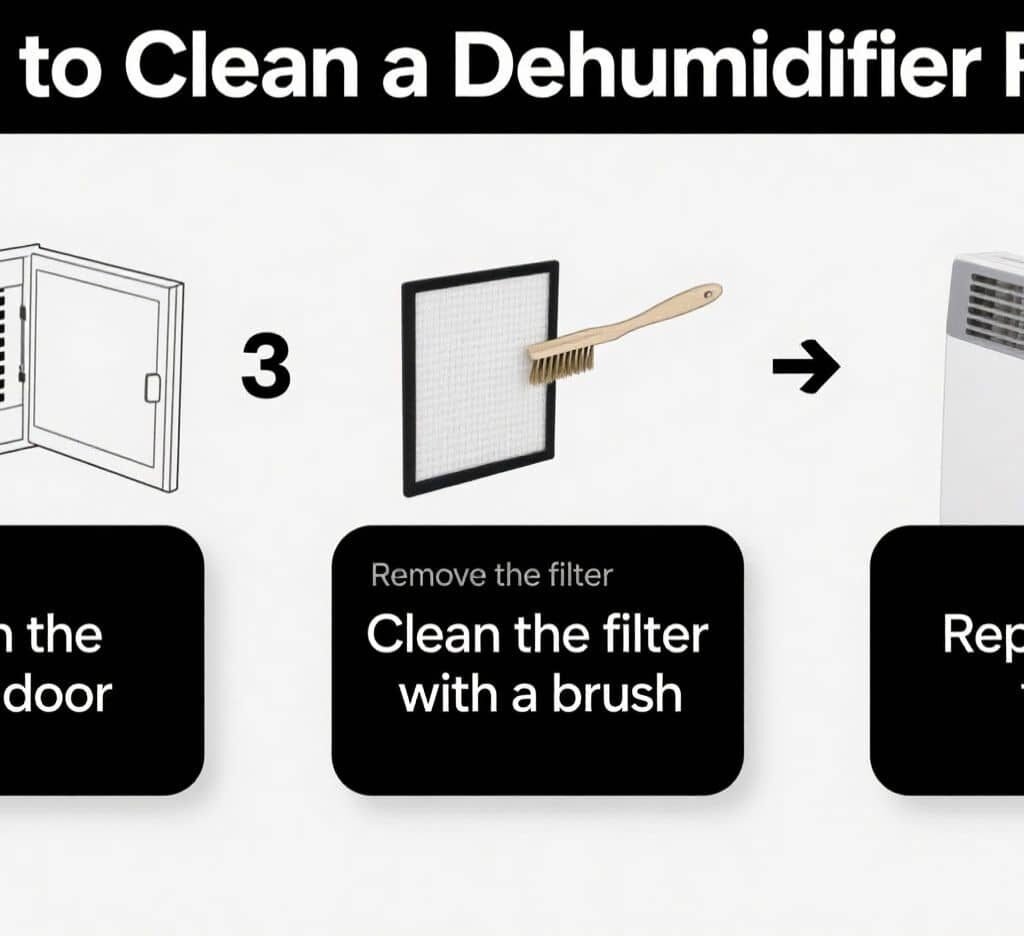
This simple component is surprisingly important. By capturing these large particles, the pre-filter prevents the delicate HEPA and carbon filters from getting clogged too quickly. This extends their life and helps the entire unit run more efficiently. Most pre-filters are washable or can be easily vacuumed clean.
The Real-World Impact: Who Benefits Most from an Air Purifier?
So, who really needs one of these machines? While anyone can benefit from cleaner air, some people will notice a more dramatic improvement.
For Allergy and Asthma Sufferers
If you live with seasonal allergies or chronic asthma, an air purifier can feel like a miracle. By running one in your bedroom, you create a clean air sanctuary for sleep. It continuously removes the airborne triggers—pollen, dust mites, mold spores—that would otherwise cause congestion, sneezing, itchy eyes, and nighttime coughing. Many users report waking up feeling more rested and breathing more clearly.
For Pet Parents
We adore our four-legged family members, but the dander and odors can be a real challenge. An air purifier with a True HEPA filter tackles dander at the source, trapping it before it can settle on surfaces or get into your airways. Paired with a carbon filter, it also neutralizes those persistent “pet smells,” leaving your home smelling fresh.
For City Dwellers and Those in Wildfire Areas
Living in a bustling city means dealing with smog, exhaust, and industrial pollutants that can seep into your home. For those in the western U.S. and other areas prone to wildfires, the threat of smoke is a serious health concern. An air purifier is an essential tool for creating a safe breathing space, capturing the fine particulate matter (PM2.5) and adsorbing the toxic gases found in smoke.
For New Parents and the Health-Conscious
Creating the healthiest possible environment for a baby is a top priority for new parents. A nursery is often filled with new items—a crib, a changing table, a rug—all of which can off-gas VOCs. An air purifier helps remove these chemicals, ensuring the air in the nursery is as pure as possible.
Your Questions Answered: Common Air Purifier FAQs
Do air purifiers help with viruses?
An air purifier can be a helpful tool in reducing the airborne transmission of viruses. While the virus particle itself is incredibly small, it typically travels inside larger respiratory droplets that are expelled when someone coughs, sneezes, or talks. These droplets are well within the size range that a True HEPA filter is designed to capture. By cleaning these droplets from the air, a purifier can help lower the concentration of viral particles in a room. It should be used as part of a layered approach, not as a standalone guarantee of protection.
Should I run my air purifier all the time?
Yes, for the best results, you should run your air purifier 24/7. Airborne pollutants are being introduced into your home continuously. Running the unit constantly ensures the air stays clean. Modern purifiers are very energy-efficient, and you can simply turn them to a low, quiet setting when you’re sleeping or just want background cleaning.
Where is the best place to put an air purifier?
Place it in the room where you spend the most time, like your bedroom or the main living area. To allow it to work effectively, give it some breathing room. Don’t shove it into a corner or place it behind a large piece of furniture. Positioning it a few feet from the wall in an open area allows for optimal air circulation.
How often do I need to change the filters?
This varies by model and how polluted your air is, but here’s a general guide:
- Pre-Filter: Clean this (if reusable) every 2-4 weeks.
- Activated Carbon Filter: Typically needs replacing every 3-6 months.
- True HEPA Filter: Usually lasts for 12 months or longer.
Many modern units have a handy indicator light that tells you exactly when a filter needs attention. Always check your user manual.
Are air purifiers noisy?
They can be, but only on the highest settings. On low to medium settings, most quality purifiers produce a gentle, humming sound similar to a small fan, often described as “white noise.” This can actually help with sleep by masking other disruptive sounds. Check the decibel (dB) rating before you buy—anything under 50 dB is great for living spaces, and under 30 dB is whisper-quiet for a bedroom.
Do they use a lot of electricity?
Not really. An ENERGY STAR-certified air purifier running on a low setting uses about as much power as a single LED light bulb. The cost to run one continuously is typically only a few dollars per month on your electricity bill.
Final Thoughts
In the end, what an air purifier does is simple yet profound: it gives you more control over your indoor environment. It’s a dedicated filtration system that works around the clock to remove the invisible cocktail of dust, dander, pollen, smoke, and chemicals from the air you and your family breathe every day. By trapping these irritants, it can lead to fewer allergy symptoms, a fresher-smelling home, and the peace of mind that comes from knowing you’re creating a healthier space. It’s a small appliance that can make a big difference in your quality of life.