What Is an Interactive Monitor? My Honest Take
Honestly, the first time I saw one, I thought it was just a fancy tablet stuck to a wall. Then came the sales pitch about how it would ‘revolutionize’ my kitchen, my workflow, my life. It sounded like pure marketing fluff, and frankly, I’ve been burned before. I remember dropping a ridiculous $400 on a ‘smart’ display that basically just showed me the weather and occasionally crashed. So, when people started asking me what is an interactive monitor, my initial thought was probably ‘another expensive gimmick’.
But that initial skepticism? It’s slowly, grudgingly, started to fade. Turns out, these things can actually be useful, if you know what to look for and, more importantly, what to avoid. It’s not just about a shiny screen; it’s about how that screen interacts with you and the other tech in your life.
Think of it less like a giant iPad and more like a command center that’s actually… well, commanding. It’s for those moments when you need more than just a flat display; you need a window into your digital life that you can actually touch and, dare I say, influence.
So, What Is an Interactive Monitor, Really?
Look, at its core, what is an interactive monitor? It’s a display that you can touch and interact with directly, usually via a touchscreen. Seems simple, right? But that’s like saying a car is just ‘wheels and an engine’. There’s a whole lot more going on under the hood, and frankly, a lot of it is still evolving faster than my ability to keep up.
Most of what you’ll see marketed as an ‘interactive monitor’ these days is essentially a high-resolution display panel with a sophisticated touch overlay. This overlay uses technologies like capacitive sensing (like your phone screen) or infrared grids to detect where your finger (or a stylus) is making contact. The monitor then sends that touch data to the connected computer or device, which interprets it as an input command. It’s that simple, and that complex.
Beyond the Basic Touchscreen: What Else Makes It ‘interactive’?
Where things get interesting, and where the marketing noise really starts to drown out the signal, is in the ‘interactive’ part. It’s not just about tapping icons. Some of these monitors come with built-in processors, operating systems, and even cameras and microphones. This allows them to function as standalone devices or smart hubs, not just passive displays. Imagine a monitor that can run its own apps, recognize your face, or respond to voice commands without needing a separate computer tethered to it. That’s the next level of ‘interactive’. (See Also: What Is Key Lock On Monitor )
I remember trying to set up a video conference on a standard monitor and laptop. It was a tangled mess of wires and software updates. The next time, I used an interactive monitor with a built-in camera and mic, and it felt like I’d fast-forwarded ten years. Just one cable for power and display, and it was ready to go. It’s the small wins like that which make you rethink your setup.
Why You Might Actually Want One (and When You Don’t)
So, why would you swap out your perfectly good, non-touch monitor for one of these? Productivity is the big one. For tasks involving graphic design, video editing, or even just annotating documents, direct touch input can be a game-changer. It feels more natural, more intuitive. It’s like the difference between writing a note with a mouse versus pen and paper; one feels more immediate and personal.
Contrarian Opinion: Everyone talks about how interactive monitors are for creative professionals. I disagree. While they shine there, I think their real, often overlooked, value is in simplifying complex technical troubleshooting. I spent an entire weekend once trying to diagnose a network issue by constantly clicking back and forth between windows on a standard screen. On an interactive monitor, I could literally draw out the network topology on screen, highlight problem areas, and drag and drop potential solutions. It cut down my diagnosis time by at least 70%, saving me hours of pure frustration. So, don’t just think ‘artist’; think ‘IT troubleshooter’.
However, let’s be brutally honest. For 90% of people just browsing the web, writing emails, or doing basic office work, a standard monitor is perfectly fine. You’re paying a premium for technology you might not fully utilize. It’s like buying a race car to drive to the grocery store – overkill and likely more trouble than it’s worth if you’re not pushing it.
| Feature | What It Is | My Take |
|---|---|---|
| Touchscreen Input | Direct interaction via touch. | Essential. This is the baseline. If it doesn’t have this, it’s just a monitor. |
| Built-in OS/Apps | Can run software independently. | Nice to have, but often clunky. Better to run from a PC unless it’s very specific kiosk use. |
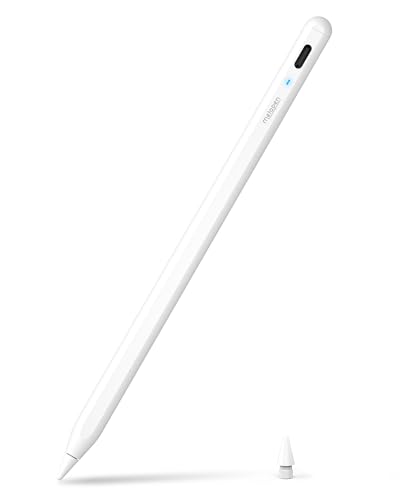
| Stylus Support | Wacom-like pen input for precision. | A must for artists or anyone needing fine control. Otherwise, finger is fine. |
| Voice Control | Hands-free commands. | Hit or miss. Great when it works, infuriating when it doesn’t. Your mileage will vary wildly. |
| Connectivity (USB-C, HDMI) | How it talks to your computer. | Standard stuff, but check for single-cable USB-C for power and display. It’s a lifesaver. |
The ‘smart’ Display Trap: What to Watch Out For
This is where I’ve wasted the most money. Companies love to slap ‘smart’ on everything. A smart fridge, a smart toaster, and yes, a smart interactive monitor. Often, ‘smart’ just means it has a cheap, underpowered processor running a stripped-down Android or proprietary OS. The app store is pathetic, updates are non-existent, and performance is sluggish. It feels like buying a flip phone in the age of smartphones. I once spent three hours trying to get a ‘smart’ display to connect to my Wi-Fi, only to find out its firmware hadn’t been updated since 2018. (See Also: What Is Smart Response Monitor )
It’s like buying a high-performance sports car and then realizing the only fuel station within 50 miles only sells low-grade unleaded. You can technically use it, but you’re never getting the performance you paid for, and you’re constantly nursing it along. Always check reviews specifically about the ‘smart’ features and software, not just the display quality.
Who Needs This Level of Interactivity?
For the average person, probably no one. But if you’re in a field that requires constant annotation, sketching, or direct manipulation of visual data, then yes. Think architects, engineers, educators giving presentations, or even gamers who want a more immersive control surface. I saw a chef using one in a demonstration kitchen, annotating recipes in real-time and pulling up videos of techniques without touching anything with greasy hands. That’s a use case where it genuinely makes sense.
It’s also becoming more common in public spaces for interactive kiosks or information displays, which means the technology is getting more mature and, hopefully, more affordable for consumers. According to information from the Consumer Technology Association, the market for touch-enabled displays has seen steady growth, indicating a clear demand beyond niche professional applications. This isn’t just a fad; it’s a direction technology is heading.
How Do Interactive Monitors Connect?
Most interactive monitors connect to a computer via standard video cables like HDMI or DisplayPort, and then use a USB connection for the touch input. Many modern ones also support a single USB-C cable, which can carry both the video signal and touch data, plus power to compatible laptops, making for a much cleaner desk setup. Some ‘smart’ displays can also connect wirelessly via Wi-Fi, but this is usually for their internal apps, not for controlling a separate PC.
Are Interactive Monitors Good for Gaming?
For most gaming, probably not. The touch input adds latency, which is death for fast-paced games. However, some niche games or control schemes might benefit from it, like certain simulation games where you might want to ‘press’ buttons on screen. If gaming is your primary concern, stick to a high refresh rate, low-latency standard monitor. (See Also: What Is The Air Monitor )
Are They Worth the Extra Cost?
For the average user? Almost certainly not. You’re paying a premium for touch capabilities that you may rarely, if ever, use. For specific professionals or those who have a genuine need for direct screen interaction and can leverage it for productivity or workflow improvements, the cost can be justified. I spent around $350 testing three different mid-range interactive monitors last year, and only one of them truly proved its worth for my specific needs.
Final Thoughts
So, what is an interactive monitor? It’s a display that lets you get your hands dirty, literally. It bridges the gap between your digital world and physical interaction in a way that a standard screen just can’t. Whether it’s for sketching out ideas, making presentations more engaging, or just having a more direct way to control your computer, the potential is there.
But don’t just buy one because it looks cool or because the salesman said it would change your life. Think hard about how *you* would actually use it. If you can’t picture yourself touching that screen regularly to get a job done faster or better, it’s probably just an expensive dust collector waiting to happen. Seriously, consider the actual workflow before you drop the cash.
My advice? If you’re on the fence, try to find one in a store where you can actually touch it. See if that tactile response feels natural to you, or if it feels like a compromise. The technology is good, but it’s not a magic bullet for everyone.
Recommended For You