What Is an iPhone Charger Called? The Truth About Cables
Ever feel like you’re drowning in a sea of tech jargon? I do. One minute I’m perfectly happy, the next I’m staring at a tangled mess of wires, wondering what the heck is even plugged into what. Take, for instance, what is an iphone charger called? Sounds simple, right? Wrong.
It’s a deceptively complex question, and the answer depends on a few factors. First, what are you trying to charge? A phone? A tablet? A watch? Each device requires a different type of cable, often with a specific wattage requirement. You might think, “a charger is a charger,” but after spending far too much money and time testing different options, I can tell you it’s not that simple.
This article will untangle the mess. You’ll understand the different types of iPhone chargers, how to choose the right one, and, most importantly, avoid the pitfalls I stumbled into. Because honestly, who wants to end up with a drawer full of useless charging bricks?
Let’s clear this up, shall we?
The Basics: What Even *is* an iPhone Charger?
Okay, let’s start with the basics. The term “iPhone charger” is used very broadly. There is no single item that *is* an iPhone charger. Instead, the term refers to two main components working together. First, you have the power adapter or charging brick. This is the cube that plugs into the wall. Second, you have the charging cable. This connects the power adapter to your iPhone.
Most people just call both of these things “the charger.”
But it’s crucial to understand the distinction. Choosing the right one determines how fast your iPhone charges, and whether or not it works properly. Get it wrong, and you’re stuck with a slow-charging phone, or even worse, a damaged battery.
Did you know that the color of your charging cable can actually change over time? I once had a white cable that turned a disgusting shade of yellow from being stuffed in my bag. Gross.
The Different Types of iPhone Charging Cables
The charging cable is the star of the show when it comes to what is an iphone charger called. Over the years, Apple has used several different types of charging cables, and it’s essential to know the difference to avoid compatibility issues. I made the mistake of assuming all cables were created equal, and it cost me. Several times.
Here’s a breakdown of the common iPhone charging cable types:
- 30-pin Connector: This is the oldest type, used on older iPhones, iPads, and iPods. You probably won’t encounter this unless you’re digging through a box of ancient tech.
- Lightning Cable: Introduced in 2012, the Lightning cable has a reversible design. This means you can plug it into your iPhone either way, which is super convenient. It’s still used on some older iPhone models, and on accessories like AirPods.
- USB-C to Lightning Cable: This cable has a Lightning connector on one end (for your iPhone) and a USB-C connector on the other. It’s used with newer iPhones and iPads, and it supports faster charging.
Many people find the Lightning cable to be the best for travel. It takes up very little space, and can be used with a variety of devices, not just your iPhone. Keep an eye on the cable for any signs of fraying or damage; a damaged cable can be a fire hazard, according to a recent report by the Consumer Product Safety Commission. (See Also: Can You Charge Iphone 13 With Lightning Cable )
I once had a Lightning cable that mysteriously stopped working. I didn’t even notice, until I was about to walk out the door and realized my phone was dead. Very frustrating.
Understanding USB-C and Power Delivery (pd)
USB-C is a new standard that is becoming more common. It’s a connector type, and it offers several advantages over older USB standards. USB-C cables can support faster charging speeds and transfer data more quickly.
Power Delivery (PD) is a fast-charging protocol that works with USB-C cables. If you have a USB-C to Lightning cable and a compatible power adapter, you can charge your iPhone much faster than with an older charger. This is a game-changer when you’re in a hurry. I used to spend hours waiting for my phone to charge. Now, I can get a significant boost in just 30 minutes.
A USB-C cable can *look* like other types of cables. USB-C is the shape of the end that plugs into the brick. If the other end is Lightning, it will plug into your iPhone. If the other end is also USB-C, it will plug into a device with a USB-C port, like an iPad Pro.
Confused? Don’t worry, many people are. The key takeaway is to look for the USB-C connector on your power adapter and cable to take advantage of fast charging.
What About Wireless Charging?
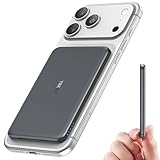
Wireless charging is a convenient way to charge your iPhone without plugging in a cable. It uses a technology called Qi (pronounced “chee”). You place your iPhone on a charging pad, and it charges wirelessly. It’s great for bedside tables or desks.
Wireless charging is not always the fastest charging method. Some wireless chargers can charge your iPhone at the same speed as a Lightning cable, while others are slower. It’s important to check the specifications of the wireless charger to see its charging speed.
Here’s something I didn’t realize at first: wireless chargers can generate heat. Make sure your iPhone isn’t getting too hot while it’s charging, as excessive heat can damage the battery. I ruined my first iPhone battery from leaving it on a wireless charger in direct sunlight.
The Power Adapter: It’s More Than Just a Cube
The power adapter is the brick that plugs into the wall, and it’s a critical part of your iPhone charging setup. The power adapter provides the electricity to charge your iPhone, and it comes in various shapes and sizes.
Power adapters are rated by wattage (W). The higher the wattage, the faster the charging speed. Apple’s standard power adapters range from 5W to 20W or more. If you’re using a fast-charging cable (USB-C to Lightning), you’ll want to use a power adapter with at least 20W. I found this out the hard way, spending $35 on a fast charger, only to find out that my old adapter was the bottleneck. Doh! (See Also: How Much Does An Apple Iphone Charger Cost )
The wattage is usually printed on the adapter itself, or you can find it in the adapter’s specifications. Don’t worry about damaging your phone by using a higher wattage adapter. Your iPhone will only draw the power it needs. It’s like using a bigger pipe to fill a smaller cup; the cup only fills as fast as it can.
My advice? Always check the wattage of your power adapter.
My $100 Mistake: The Wrong Charger
I learned the hard way that not all chargers are created equal. Several years ago, I decided to buy a car charger. I spent about $100 on one that promised super-fast charging. It was a brand I trusted, and it had great reviews. I was convinced it would save me when I was on the road. The cable was super thick and the charger had a built-in fan – it looked like something from the future.
After a long road trip, my iPhone battery was still dead. It took me a while to realize it wasn’t charging, even though the charger was plugged in and the light was on. It turned out the charger’s output wasn’t compatible with my iPhone. I had wasted all that money.
I had to learn a critical lesson: always check the charger’s specifications and compatibility before buying. Read the fine print! Don’t just trust the marketing hype. And always, always test it before you need it.
Here’s What to Look for in an iPhone Charger
Choosing the right iPhone charger can be overwhelming, but it doesn’t have to be. Here’s a quick guide to help you:
- Identify Your iPhone Model: This will determine which cable and power adapter you need.
- Check for Compatibility: Make sure the cable and power adapter are compatible with your iPhone.
- Consider Charging Speed: If you want fast charging, choose a USB-C to Lightning cable and a power adapter with at least 20W.
- Read Reviews: Check customer reviews to see what other people have experienced.
- Buy from a Reputable Brand: Stick to well-known brands, or the Apple Store.
These are not just suggestions; they are guidelines to prevent frustration. I’ve wasted money on chargers that promised everything and delivered nothing. Save yourself the headache.
iPhone Charger: Comparison Table
Here’s a comparison table of different iPhone charging options, to help you make an informed decision:
| Charger Type | Cable Type | Power Adapter (Wattage) | Charging Speed | My Opinion |
|---|---|---|---|---|
| Standard Charger | Lightning | 5W | Slow | Avoid. These are ancient. |
| Fast Charger | USB-C to Lightning | 20W+ | Fast | Highly recommended if you want to charge quickly. |
| Wireless Charger (Qi) | N/A | Varies | Moderate | Convenient, but not always the fastest. Great for bedside use. |
| Car Charger | Lightning or USB-C | Varies | Varies | Useful for road trips, but make sure it’s compatible with your iPhone and car. |
What Is an iPhone Charger Called? Your Frequently Asked Questions Answered
What Kind of Charger Does an iPhone Use?
It depends on the iPhone model. Newer iPhones use a USB-C to Lightning cable, while older models use a Lightning cable. All iPhones use a power adapter (charging brick) to plug into the wall.
What Is the Difference Between a Lightning Charger and a USB-C Charger?
Lightning chargers are the older standard, with a Lightning connector on both ends. USB-C chargers have a USB-C connector on one end (that plugs into the power adapter) and a Lightning connector on the other (that plugs into your iPhone). USB-C to Lightning cables support faster charging. You will need a USB-C charging brick to use the USB-C to Lightning cable. (See Also: Can You Wireless Charge Iphone 11 With Case )
What Is the Most Common iPhone Charger?
The most common iPhone charger is probably the Lightning cable, since it was used for many years. However, the USB-C to Lightning cable is becoming increasingly common, especially with newer iPhone models that support fast charging.
Can I Use Any Charger for My iPhone?
You can use any charger, but the charging speed and compatibility will vary. Always use a charger that is compatible with your iPhone and that meets the power requirements. Apple recommends using their own chargers or MFi-certified chargers for the best results.
Do I Need a Special Charger for iPhone 14?
The iPhone 14 uses a USB-C to Lightning cable, and it supports fast charging. You don’t *need* a special charger, but if you want to charge your iPhone 14 quickly, you should use a USB-C to Lightning cable and a power adapter with at least 20W. Don’t be fooled into buying a 30W charger. I bought one and realized it was overkill. It works just fine, but is a waste of money.
The Bottom Line
Navigating the world of iPhone chargers can seem confusing, but it doesn’t have to be. Understanding the basics, knowing the different cable types, and choosing the right power adapter will make all the difference. It’s really the difference between a phone that’s ready to go, and one that is dead at the worst possible moment.
Verdict
So, the next time someone asks you what is an iphone charger called, you can confidently tell them it is a combination of a cable and a power adapter, and now you understand how it all works. You can choose the correct one. Remember the frustration I had with the car charger? I don’t want you to repeat my mistakes.
But here’s the most important thing: don’t overthink it. Focus on getting a charger that works for your iPhone, meets your needs, and doesn’t break the bank. You’ll be fine.
My advice? Go to the Apple Store (or a reputable retailer), and talk to an expert. They can help you pick the right one.
Recommended Products
Recommended For You