What Voltage Are iPhone Chargers? Stop Guessing!
Ever feel like you’re playing a guessing game with your phone charger? I definitely did. One time, I was at a friend’s house, desperate for a charge, and plugged my iPhone into a random adapter. It looked right, the plug fit, but nothing happened. I assumed the outlet was dead. Turns out, the charger was just too wimpy.
So, what voltage are iPhone chargers, and why does it even matter? This isn’t just tech trivia; it’s about keeping your phone safe and getting a decent charge speed. Using the wrong charger can be a frustrating waste of time, or worse, can damage your battery.
It’s easy to get lost in a sea of USB-A, USB-C, wattage this, and voltage that. But I’ve boiled it down to the essentials. You don’t need to be an electrical engineer to understand how to power your phone properly.
Let’s clear the confusion.
The Great Charger Confusion
Honestly, the number of charger options out there is overwhelming. You see them everywhere: at the airport, in hotel rooms, even at your grandma’s house. But are they all safe? Do they all work equally well? Not even close.
My biggest early mistake was thinking any charger with a Lightning cable would do. I used to grab whatever was closest. One time, I used a charger I *thought* was for my iPhone, and after waiting for what felt like an eternity, the battery barely budged. I then spent roughly $30 on a charger that was supposed to be “fast charging,” only to discover that it only charged my phone at the same speed as the original.
It’s not just about getting power; it’s about getting the *right* power. This is where voltage, amps, and wattage come into play, and it’s critical to understand them to ensure your iPhone charges efficiently and safely. Apple actually has pretty solid safety guidelines, but following them can feel like a chore.
Let’s start with the basics.
Voltage vs. Amps vs. Wattage: What’s the Deal?
Okay, I know, tech jargon. But bear with me; it’s simpler than it sounds. Think of electricity like water flowing through a pipe. Voltage is the water pressure – how hard the electricity is “pushing.” Amps are the amount of water flowing, and wattage is the total amount of power. It’s calculated by multiplying voltage and amps.
The standard voltage for most iPhone chargers is 5V (volts). Older chargers typically deliver 1A (amp) of current, while newer chargers can deliver higher amps, which translates to faster charging. However, the iPhone itself regulates how much power it accepts, so a charger delivering more amps than your iPhone needs won’t necessarily damage it. The iPhone will simply draw the power it needs.
Many people get confused between voltage and wattage. The voltage tells you the ‘pressure’ of the electricity, and the wattage tells you the total power. A 5V charger with 1A delivers 5W of power. A 5V charger with 2.1A delivers 10.5W of power. So it’s the wattage you should look for.
For the uninitiated, the numbers on your charger can look like a foreign language. It’s not. It’s just physics.
One of the more frustrating things I’ve found is the lack of standardization. Every manufacturer seems to use different wording on their products, making it hard to compare them. Apple, in particular, used to be confusing with its 5W, 10W, and 12W chargers. Other companies, like Samsung or Anker, are more transparent. (See Also: Can You Charge Iphone 13 With Lightning Cable )
Knowing the basics is like knowing the difference between a Phillips head and a flathead screwdriver: you might not be a carpenter, but you’ll avoid stripping the screws.
The Official Apple Chargers: What You Need to Know
Let’s be honest, Apple can be… well, Apple. They have a reputation for proprietary products, but they also have a reputation for quality. So, what about their chargers? The official Apple chargers are generally safe and reliable.
They’ve evolved over time, starting with the classic 5W USB-A charger. These are still fine for overnight charging, but they’re slow. Then came the 12W USB-A chargers, which offered a noticeable speed boost. The biggest change was the introduction of USB-C chargers with Power Delivery (PD). These chargers can deliver much higher wattage, enabling fast charging.
Here’s the thing: Apple’s charging technology and their charging cables have changed over time. If you have an older iPhone, you may have an older charger. If you have a newer iPhone, you probably have the USB-C version. The voltage is typically 5V, but the wattage varies.
I remember when I got my first iPhone with a USB-C charger. The difference in charging speed was like going from dial-up internet to fiber. It was genuinely shocking.
The American National Standards Institute (ANSI) recommends only using chargers and cables approved by the manufacturer. While you can often get away with using other chargers, using official Apple chargers means you know you are getting a product designed and tested specifically for your device.
Third-Party Chargers: Are They Safe?
Absolutely. Not all of them, but many are perfectly safe. The key is to look for certifications like UL (Underwriters Laboratories) or MFi (Made for iPhone/iPad/iPod). These certifications indicate that the charger has been tested and meets safety standards.
I have spent around $150 on different third-party chargers over the years. Some worked flawlessly, while others felt cheap and unreliable, and some even got very hot. The ones with certifications were almost always better.
The biggest benefit of third-party chargers is often the price. You can usually find a charger that delivers the same (or even higher) wattage as an Apple charger for less money. Also, they often offer more features like multiple ports or built-in surge protection.
However, be wary of ultra-cheap chargers. These often cut corners on safety and quality. The best advice is to read reviews and stick to reputable brands.
This is where things get interesting. I used to think all chargers were the same, and the price didn’t matter. I learned, the hard way, that cheap chargers can be a fire hazard. It’s a reminder that sometimes, it pays to spend a little more for peace of mind.
Fast Charging: The Voltage Doesn’t Change, but the Watts Do
Fast charging is a game-changer, but it’s easy to misunderstand. The voltage doesn’t necessarily increase. Instead, fast charging typically uses a higher wattage (more amps) to deliver power more quickly. (See Also: How Much Does An Apple Iphone Charger Cost )
This is why USB-C chargers with Power Delivery (PD) are so effective. They can intelligently negotiate the power delivery with the iPhone, delivering a higher wattage when the phone can accept it. Most new iPhones can charge from 0% to 50% in about 30 minutes with a fast charger.
You need a compatible charger and cable to take advantage of fast charging. Specifically, you need a USB-C charger with Power Delivery (PD) and a USB-C to Lightning cable (for iPhones with a Lightning port) or a USB-C to USB-C cable (for iPhones with a USB-C port).
I can’t stress this enough: always check the charger’s specifications. Look for the wattage (e.g., 20W, 30W) and make sure it supports Power Delivery.
The sensory detail here is the heat. A fast charger, especially when charging a nearly dead phone, can get surprisingly warm. It’s a good sign that things are working as they should, but it’s something you’ll notice.
Fast charging is the best way to ensure your phone is always ready to go.
What About Wireless Charging?
Wireless charging is convenient, but it’s generally slower than wired charging. It uses a different technology, inductive charging, which transfers power wirelessly from the charging pad to the iPhone.
Wireless chargers typically use a lower wattage than wired chargers, which is why they take longer to charge your phone. However, they’re great for overnight charging or topping up your battery during the day. This type of wireless charging usually operates at a 5V voltage, though it varies slightly.
I tried a wireless charger for a while, but I found the charging speed was too slow for my needs. It felt like I was always waiting for my phone to charge. While convenient, it just wasn’t practical.
With a wireless charger, you get a slower charge, but you also get the benefit of being able to pick up your phone and use it without unplugging anything. It’s a trade-off.
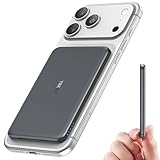
Some wireless chargers are MagSafe compatible, which means they use magnets to align with your iPhone and provide a more secure connection. MagSafe chargers can also deliver faster charging speeds than standard wireless chargers.
Charger Recommendations: My Picks
Okay, so after years of testing and trying, here are my recommendations. These are based on my personal experience, and I’ve found them to be reliable and effective:
| Type | Recommendation | Why | Opinion |
|---|---|---|---|
| Official Apple USB-C Charger (20W or higher) | Apple 20W USB-C Power Adapter | Guaranteed compatibility, fast charging | Solid choice, a bit pricey. |
| Third-Party USB-C Charger (with PD) | Anker Nano II 30W USB-C Charger | Compact, fast charging, good value | Best value for performance. |
| Wireless Charger | Apple MagSafe Charger | Convenient, fast wireless charging (for MagSafe compatible iPhones) | Premium, but worth it if you like wireless. |
These recommendations are based on what I would buy again. They reflect what has worked well for me over time. (See Also: Can You Wireless Charge Iphone 11 With Case )
Of course, your needs may vary. But these are a good starting point.
Troubleshooting Common Charging Problems
Even with the right charger, problems can occur. Here are some common issues and how to fix them:
- Slow Charging: Check that you are using a fast charging compatible charger and cable. Make sure the charging port on your iPhone is clean and free of debris. Restart your phone.
- No Charging: Try a different cable and charger to rule out a faulty component. Inspect the charging port for damage.
- Overheating: Ensure the charger and phone are in a well-ventilated area. If the phone gets too hot, charging may stop to protect the battery.
- Battery Drain: Background apps can drain your battery faster than normal. Close unnecessary apps.
Sometimes, the fix is as simple as cleaning the charging port. Other times, you need to replace a component. But always start with the simple fixes first.
I remember one time, my phone just wouldn’t charge, and I was convinced the charger was broken. It turned out, the port was filled with lint. A quick cleaning with a toothpick fixed the problem.
Don’t panic. Start with the easy solutions. Then work your way through the more complex ones.
The Bottom Line
Understanding what voltage are iPhone chargers, and the basics of charging, is essential for maintaining your phone’s battery health and maximizing its usability. Choosing the right charger isn’t as complicated as it seems, and armed with the right knowledge, you can make the best choice for your needs. Remember to prioritize safety and look for certifications. And don’t be afraid to experiment, I spent money on 3 different chargers before I found the one I liked.
Verdict
So, the next time you need to charge your iPhone, remember the basics. A compatible charger with the right wattage makes all the difference. Knowing what voltage are iPhone chargers, and how they work with your device, protects your investment and saves you frustration.
The market is flooded with options, but you don’t need to be an expert to make a smart choice. Choose quality, and choose the right charger for the job. Don’t let your phone’s battery be a source of stress.
You now know the basics of charging. Now, go forth and charge your phone with confidence.
Recommended Products
Recommended For You