You brought home a new air purifier, ready for the promise of fresher, cleaner air inside your home. You unbox it, plug it in, and then a question stops you cold: Where exactly should this appliance go? This is a more significant question than many people realize. The most powerful air purifier will not perform well if it is stuck in a bad location. Its placement is the secret to getting the clean air you want.
The spot you choose for your air purifier directly affects its performance. It dictates how well the machine can pull in dirty air, scrub it clean, and send fresh air back out into your room. This guide will show you how to find the perfect spot for your device, making the whole process simple and clear.
The Core Principles of Air Purifier Placement
Some basic rules apply to air purifiers no matter which room they are in. These ideas are the foundation of good air quality in your home.
Give It Space to Work
Your air purifier needs open space all around it. Many units pull in air from all directions, so pushing one against a wall or behind a big chair blocks its intake. The machine cannot clean the air it cannot reach. A good practice is to leave at least one to two feet of clear space on all sides. This open area allows the purifier to establish a strong, continuous airflow, pulling in pollutants from across the room.
Place It Where You Live
Your air purifier belongs in the room where you spend the most time. For most families in the United States, this means the bedroom or the living room. Cleaning the air in a spare room that is rarely used does not offer many benefits to your daily health. A single air purifier can be moved. You can keep it in the living room during the day and then move it to your bedroom at night to maximize its use.
Go Straight to the Source
Think about the main reason you got an air purifier. Your goal is to position the unit as close to the source of the pollution as you can.
- For Allergies: A good spot is near the window where pollen enters or in a bedroom where dust mites are common.
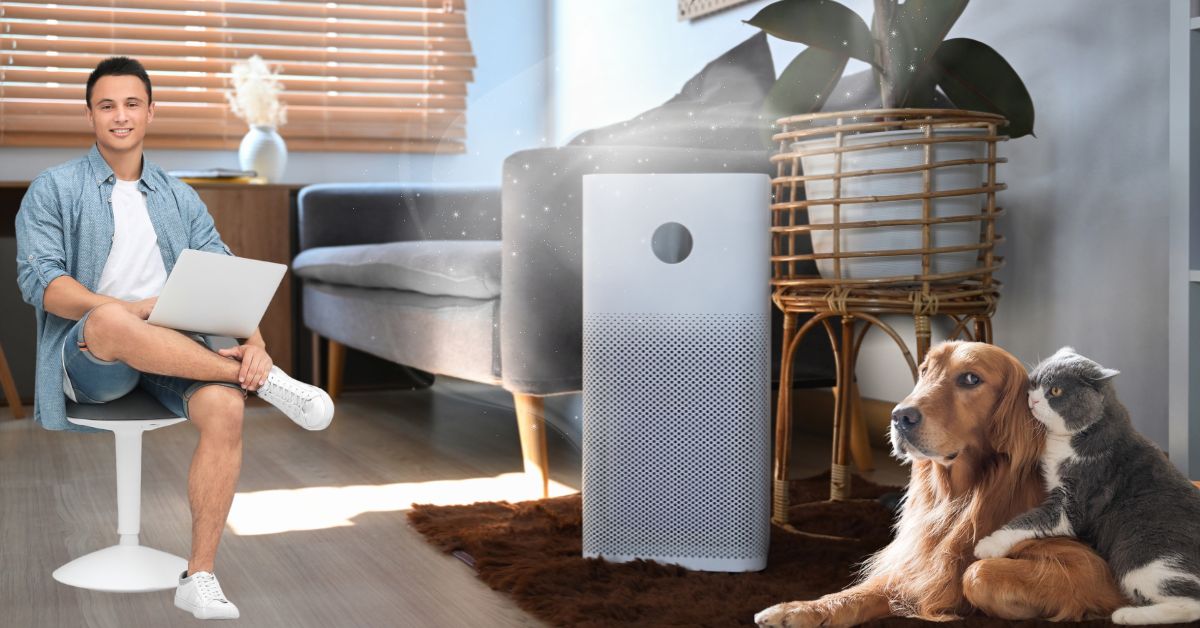
- For Pets: The unit works best near a pet bed, a cat’s preferred snoozing spot, or the litter box to manage dander and odors.
- For Kitchen Odors: A purifier placed near the kitchen’s entrance can stop cooking smells from spreading through the house.
A Note on Height
Many people set their purifiers on the floor, and that works fine. A little elevation, however, can sometimes improve its collection of airborne particles. Things like smoke and pollen float at different levels. Putting the unit on a small, sturdy end table might help it catch more of these floating irritants. A floor placement is still a solid choice for heavier particles like pet dander that drift downward. You can try both positions to see what works best for your needs.
A Room-by-Room Placement Guide
Each room presents its own set of air quality challenges. Here is a breakdown of how to find the ideal placement in your main living spaces.
The Bedroom: Your Zone for Clean Sleep
Your bedroom is perhaps the top spot for an air purifier. People spend roughly one-third of their lives sleeping, and better air quality can lead to more restful nights. A purifier can help reduce allergy symptoms and snoring, allowing you to wake up feeling more refreshed.
Where to Place It:
The ideal location is about 6 to 10 feet from the head of your bed. This distance creates a clean air bubble around you as you sleep. It is also far enough away that the sound and airflow will not bother you. Placing it across the room near a doorway is another great option, as it can filter air entering the space.
What to Avoid:
Do not place the unit right beside your bed. The direct stream of air might be disruptive, and the sound can seem louder when it is right next to your head. Keep it away from heavy drapes and out of tight corners.
The Living Room: The Center of Activity
The family room is a high-traffic zone where people and pets gather. Pollutants from outside often find their way here. This makes the living room a prime area for air purification, especially in homes with open floor plans.
Where to Place It:
Set the purifier in a spot with good air movement, such as near a doorway or a main walkway. This position helps the machine capture particles as they travel through the room. A stale corner of the room can also be a good spot to get the air moving again.
What to Avoid:
The most common error is hiding the purifier behind a sofa or TV stand for aesthetic reasons. This action severely limits the machine’s ability to clean the air. Let the appliance be seen so it can do its job.
The Kitchen: Fighting Odors and Smoke
Kitchens produce strong smells, smoke from cooking, and chemical compounds from cleaning supplies.
Where to Place It:
You do not want the purifier right next to the stove where it can be sprayed with grease. A better position is on the other side of the room or near the kitchen’s main entrance. It acts like a guard, catching odors and smoke before they drift into other areas. A countertop spot, if available, can be great for capturing airborne grease.
The Nursery: Protecting Little Ones
An air purifier is a great tool for a baby’s nursery, helping to keep the air free from irritants. Safety is the top priority in this room.
Where to Place It:
Position the unit far from the crib, out of your child’s reach. The power cord must be tucked away or secured against the wall to remove any tripping or pulling hazards. A clear spot across the room from the crib is a perfect choice.
Common Placement Mistakes to Sidestep
Certain placement errors will prevent your air purifier from working correctly. Steer clear of these frequent missteps.
- The Corner Trap: A corner is one of the worst spots for a purifier. It restricts airflow and causes the machine to just clean the same small pocket of air over and over.
- Hiding Behind Furniture: Do not hide your purifier behind a couch or bookshelf. Performance is more important than appearance.
- Blocking It Under a Table: A purifier placed directly under a table cannot push clean air upward and throughout the room.
- Ignoring High Humidity: Keep the unit away from very humid areas like a bathroom. Too much moisture can damage certain filters and reduce their effectiveness.
Answering Your Air Purifier Questions
Here are answers to some of the most common questions about air purifier use and placement.
Can you put an air purifier on the floor?
Yes, the floor is a common and effective spot. A floor placement is great for capturing larger, heavier particles like pet hair and dust that settle toward the ground. For tiny particles that float higher in the air, raising the unit onto a small table might offer a slight advantage, but the floor is still a very good position.
Should I put my air purifier on high or low?
Your fan speed setting depends on the situation. Use the highest setting for a quick clean, like after you finish cooking or when seasonal pollen counts are high. For continuous, all-day operation, a low setting is quiet and energy-efficient. Many units have an “Auto Mode” that adjusts the fan speed for you based on the room’s current air quality.
Should I run my air purifier 24/7?
Continuous operation provides the best results. The air inside your home is constantly being filled with new particles. Dust settles, furniture releases chemicals, and allergens drift inside. A purifier that runs all the time maintains a consistent level of clean air. Modern devices are designed for constant use and do not use much electricity on their lower settings.
How close should an air purifier be to me?
A distance of 6 to 10 feet is usually best. This range is close enough for you to be in the zone of clean, circulating air but far enough to prevent the sound or airflow from being a distraction, especially at night.
Can I put my air purifier in a corner?
You should avoid placing your purifier in a corner. It needs open space to pull in air from multiple directions and circulate clean air effectively. A corner placement severely limits its ability to do its job. Pull it out into a more open area.
Does it matter where you place an air purifier?
Yes, placement has a huge impact on performance. The right spot allows for maximum airflow and targeted cleaning. A poor spot can make even a great purifier ineffective.
How do I know if my air purifier is working?
A few signs show your unit is working. The clearest sign is a dirty filter. Check it after a month of use. A filter covered in gray dust proves it is capturing pollutants. You might also notice that you sneeze less or that your allergy symptoms are milder. Another sign is that household odors from pets or cooking disappear faster, and less dust collects on furniture.
Can an air purifier be too big for a room?
A purifier that is too large for a room is not a problem. A unit rated for a large space will just clean the air in a small space very quickly. The only real drawbacks would be the physical size and potential noise of a bigger machine. A more frequent issue is a unit that is too small for a room, as it will struggle to keep up with the pollutants.
Do air purifiers work with windows open?
They do not work well with open windows. This setup is like trying to cool your house with the air conditioning on and all the windows open. The purifier is forced to clean an endless supply of new air from outside. For best performance, keep the doors and windows of the room closed while the unit is running.
Final Thought
Your air purifier is a great tool for a healthier home. Its location is the key to its success. By giving it open space and putting it in the rooms you use most, you can be confident that it is working hard to provide you with fresh, clean air. Take a moment to find that perfect spot. Your lungs will thank you for it.