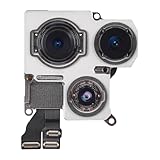
Why Am I So Ugly on iPhone Camera? The Brutally Honest Truth
Ugh, the iPhone camera. We all know the feeling: you smile, pose, and then *bam* — a photo that makes you want to hide under a rock. Why am I so ugly on iPhone camera? It’s a question that has plagued selfie-takers since the first front-facing lens.
You might think it’s just you, but trust me, you’re not alone. I remember the absolute disappointment when I first upgraded from an older Android phone. I thought the iPhone’s camera would magically transform me into a supermodel. Instead, I got a picture that looked like a mugshot.
That’s because your iPhone is not broken, and you’re not alone in feeling this way. So, what gives? The answer, as it turns out, is a cocktail of factors, from the lens itself to the way the software processes images.
The Iphone’s Camera: A Double-Edged Sword
The iPhone camera is undeniably powerful, a marvel of modern technology. But like any tool, it has its quirks. It’s often praised for its ability to capture detail and vibrant colors, but what if that very detail betrays you? It’s like having a magnifying glass that also shows every single pore. This is one of the reasons behind the age-old question, “Why am I so ugly on iPhone camera?”
It’s time for a reality check. The iPhone, in its quest for photographic perfection, can sometimes prioritize technical accuracy over flattering results. The camera captures every blemish, every wrinkle, every imperfection with stunning clarity. This can be jarring if you’re used to cameras that soften features or simply smooth things out.
Furthermore, that sharp focus can be unforgiving. Many Android phones and older cameras, by comparison, often had a built-in softening effect. The iPhone, aiming for realism, doesn’t always play this game. This difference in approach is a significant factor in how we perceive our appearance in iPhone photos.
The Algorithm’s Unforgiving Eye
The iPhone’s image processing is a complex beast, involving multiple algorithms working in concert. These algorithms analyze the image, make adjustments to brightness, contrast, and color, and apply various enhancements. However, these enhancements, intended to improve the photo, can sometimes work against you.
For example, the iPhone’s skin smoothing, while present, is often subtle, especially compared to some competitors. This means that imperfections are still visible. What’s worse, the iPhone’s default settings can sometimes over-sharpen images, accentuating fine lines and textures.
Even worse, the built-in ‘smart HDR’ feature can make your face look oddly lit. It does this by combining multiple exposures, creating a balance of light and shadow, but in some cases, this can result in an unflattering image. It often leaves people asking, why am I so ugly on iPhone camera?
I made a mistake a few years back. I was convinced the secret to great photos was a fancy new iPhone. I spent almost $1,200 on the latest model, thinking it would magically fix my selfie game. Turns out, it just showed me how much my skincare routine was slacking. (See Also: What Is Ae Af Lock On Iphone Camera 2 )
Lighting: The Silent Killer of Selfies
Lighting, my friends, is everything. The iPhone’s camera is sensitive, and if you’re not careful, it will amplify any lighting flaws. Harsh overhead light, for instance, can cast unflattering shadows and highlight every imperfection. Front-facing light can also cause issues. The flash on an iPhone is notoriously harsh, and can leave you looking washed out or with unnatural skin tones.
Even the time of day can make a huge difference. Taking photos in direct sunlight can lead to harsh shadows and squinting eyes. Overcast days are often ideal, as the soft, diffused light minimizes imperfections.
Consider this: imagine the difference between being lit by a single spotlight versus being illuminated by a softbox. One highlights every bump and crease, while the other creates a flattering glow. The iPhone, in a less-than-ideal lighting situation, is akin to the spotlight.
The Lens: A Matter of Perspective
The iPhone’s front-facing lens has a specific focal length, which affects how it captures your face. Generally, the lens is wide, meaning it captures a broader field of view. This is great for fitting more of the background into your shot, but it can also distort your features. For example, a wide-angle lens can make your nose appear larger than it is.
The lens on your iPhone is similar to the lens in a car’s side mirror. It shows you everything, but it warps the image slightly. The wider the lens, the more distortion you’ll see.
This distortion is not necessarily a flaw of the lens, but a consequence of its design. It’s simply a matter of physics. Therefore, the effect on your face is often what makes you ask, why am I so ugly on iPhone camera?
This is why holding the phone at arm’s length can sometimes improve your selfies. It reduces the distortion and creates a more flattering perspective. If you are close to the lens, you may find your face has a distorted appearance.
The Software’s Subtle Betrayal
The iPhone’s software is constantly working to process and enhance the images you take. This processing is complex, and it sometimes results in unexpected outcomes. The software may attempt to correct for the lens distortion I mentioned above, but the results can vary.
The iPhone’s software also applies a level of sharpening to images to make them appear more crisp and detailed, and it tries to compensate for the lighting conditions. The iPhone’s software is designed to make the image appear better, but it sometimes misses the mark. It’s a bit like having a friend who tries to give you fashion advice but always recommends something you wouldn’t be caught dead in. (See Also: What Does Live Do On Iphone Camera )
Ultimately, it is a complicated series of choices about how to best represent what is in front of the lens.
How to Take Better iPhone Selfies
So, you’re still wondering how to take a great selfie on your iPhone? There are some steps you can take to make the photos look better.
- Find the Right Lighting: Natural light is your best friend. Position yourself near a window or go outside on an overcast day. Avoid direct sunlight.
- Experiment with Angles: Try tilting your phone up or down, and move it around to find the most flattering angle.
- Clean the Lens: A dirty lens can create blurry images. Wipe it with a microfiber cloth before each shot.
- Use the Back Camera: The rear camera is generally better than the front-facing camera.
- Edit Judiciously: Use editing apps to subtly adjust brightness, contrast, and color. Don’t go overboard with filters or smoothing.
These tips are fairly consistent with what the American Photography Association recommends, as well as many other sources.
Apps to Consider
If you’re still not satisfied with your iPhone selfies, there are several apps designed to enhance your photos. However, it’s essential to use these apps with caution, as they can quickly lead to unrealistic results. Here are a few options, along with my take on each:
| App | What it Promises | My Opinion |
|---|---|---|
| Facetune | Advanced editing features, including skin smoothing, teeth whitening, and reshaping. | This can be fun, but it’s easy to go too far. The results can look fake very quickly. I’ve wasted about $40 on this app over the years. |
| BeautyPlus | A wide range of filters, makeup effects, and retouching tools. | A little much for me, but can be useful for minor adjustments. There are a lot of options, so you might get a good picture eventually. |
| VSCO | A classic app for filters and adjustments, known for its subtle and artistic approach. | A great option for enhancing photos without making them look overly processed. The filters are generally pretty good, and it’s easy to use. |
Remember, the goal is to enhance your photos, not to create a completely different version of yourself. A little goes a long way.
Why Do I Look Different in Photos?
This is a common concern. There are multiple reasons. First, cameras capture a two-dimensional representation of a three-dimensional object. The way light interacts with your face, the angle of the camera, and the lens’s focal length can all affect how you appear. Some people perceive that they look better in the mirror, while others find that they prefer the way they look in photos.
According to research, most people are actually more familiar with their mirror image, so the photo can feel ‘wrong’. There is also the issue of what you believe is attractive. You may have a preference for the way your face looks, and it does not always align with the technical characteristics of the lens or lighting.
Ultimately, it comes down to a matter of perception. You are used to seeing yourself in the mirror, and a photo is a different view.
Addressing the ‘ugly’ Issue: How to Feel Better
While the iPhone camera can be harsh, there are things you can do to feel better about your photos. (See Also: Why Are My Iphone Videos Upside Down )
- Embrace Imperfection: Real people have imperfections. They are what make you unique and authentic.
- Focus on the Good: Instead of fixating on flaws, focus on your best features.
- Practice Self-Compassion: Be kind to yourself. Photos are just snapshots in time, not a reflection of your worth.
- Limit Comparisons: Avoid comparing yourself to others on social media. People often present highly curated versions of themselves.
- Remember the Moment: Your photos are a record of your life. They can bring back memories and emotions.
For example, my wife and I were on vacation and took hundreds of photos. Some of them were awful, and some of them were pretty good. However, when we looked back at the photos, the ones we enjoyed the most were not necessarily the ones where we looked perfect. Instead, they were the ones where we were smiling, laughing, and having a good time. That, ultimately, is what matters.
Faq: Answering Your Burning Questions
Why Do I Look Worse in Selfies Than in the Mirror?
Mirrors provide a reversed image of your face. You’re accustomed to this reflection, which is why selfies can look unfamiliar. Additionally, the camera lens and lighting can alter your features, leading to a different perception.
How Can I Make My Face Look Better in Photos?
Experiment with lighting, angles, and poses. Clean your lens and consider using the back camera. If editing, apply subtle adjustments to brightness, contrast, and color. Choose a neutral background.
Does the iPhone Camera Make You Look Fatter?
A wide-angle lens, like the one on your iPhone, can distort your features, including making your face appear wider if you are too close to the camera. Good lighting and the right angle are essential. Step back, try a different lens, and take a few test shots.
Why Does My Skin Look So Bad in iPhone Photos?
The iPhone camera captures every detail, including imperfections. Lighting plays a huge role. Avoid harsh light, and consider using a softbox or diffused lighting to minimize shadows and imperfections.
Conclusion
So, the next time you look at a photo and ask, why am I so ugly on iPhone camera? Remember, it’s often not about you. It’s about the camera, the lighting, the angle, and the software. We’ve all been there — staring at a less-than-flattering photo and wondering what went wrong.
Armed with the information in this article, you can make informed choices about how to use your iPhone’s camera to take better photos. This will lead to you enjoying your pictures more. However, you can also consider how you view your own appearance.
Ultimately, the best photos are the ones that capture the essence of who you are. The ones where you are laughing, living, and being yourself. The iPhone camera is a tool. Use it wisely.
- Why Don't My iPhone Photos Show Up on My Computer? The Real Fix
- Why Does iPhone Camera Make My Face Look Crooked? The Real Truth.
- How Do I See My iPhone Photos on Icloud: See iPhone Photos on...
- What Is Live Feature on iPhone Camera? The Real Deal.
- Why Are My iPhone Photos Not Loading? Fixes That Actually Work
Now, go forth and take some photos. See if you can get some great ones!
Recommended Products
Recommended For You

![[Dual-Lens] Endoscope Camera with Light, 1920P HD Borescope with 8+1 Adjustable LED Lights, IP67 Waterproof 16.5FT Semi-Rigid Snake Cord Inspection Camera for iPhone, iPad and Android Phone (Type C)](https://m.media-amazon.com/images/I/41avH-scJML._SL160_.jpg)