
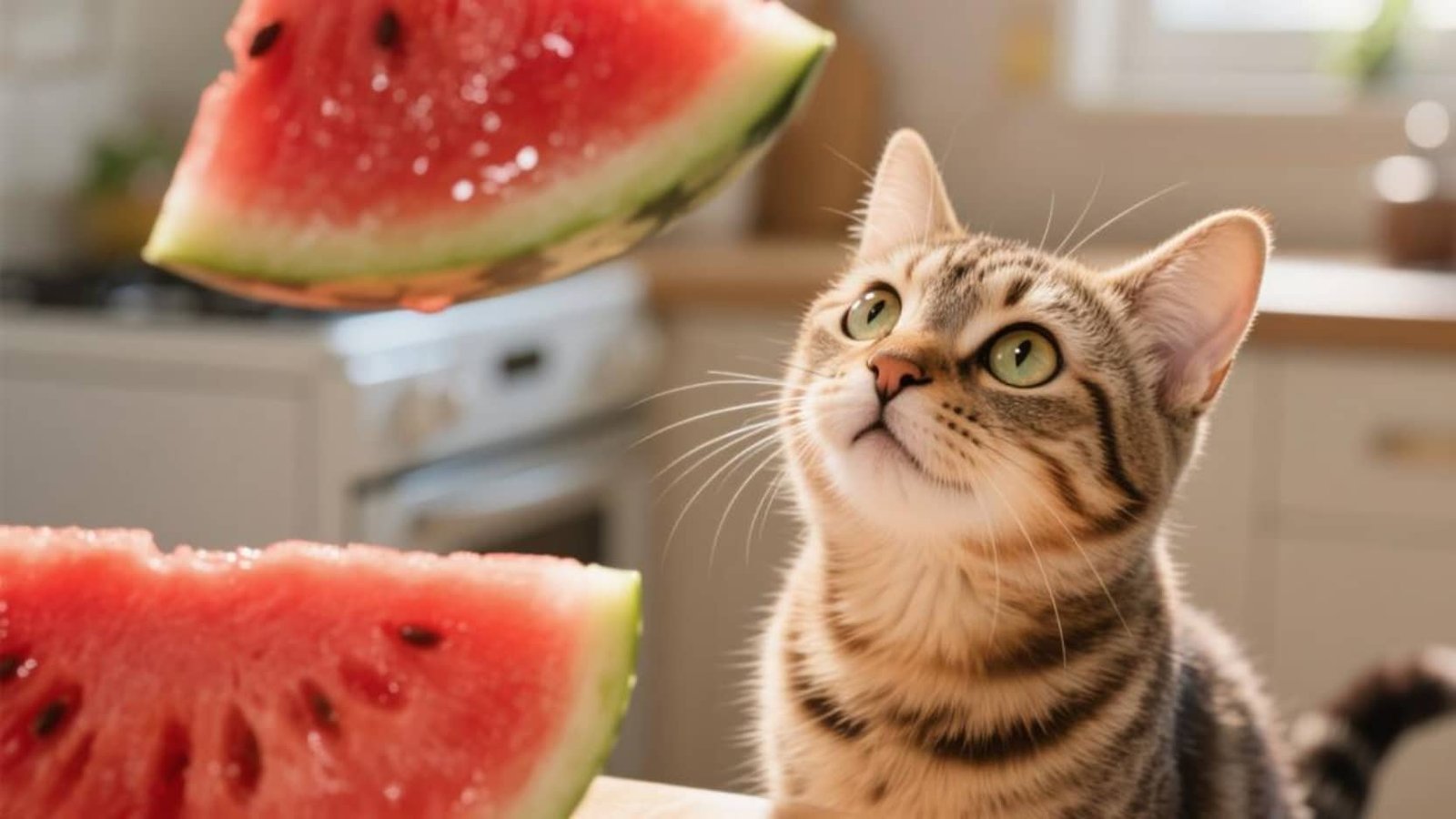
The sun is high in the sky, you have the grill going in the backyard, and a big slice of cold, juicy watermelon sits on your plate. It’s the perfect summer moment. A familiar nudge against your leg pulls your attention. Your cat, normally picky about people’s food, is looking up with an unusual amount of interest.
That little meow seems to ask a question. “Can I have some?”
Many cat parents across the United States have this exact thought. You want to share a cool treat with your furry family member, but their health and safety come first. So, what is the real answer to “can cats eat watermelon?”
The simple answer is yes, they can. But this “yes” comes with some very big conditions. The pink flesh of the fruit is not poisonous to cats. It is not, however, a normal part of their diet. This guide breaks down everything a responsible pet owner needs to know, from the good to the bad and the right way to share.
The Truth About Cats and Watermelon
To understand if a food is right for your cat, we must first look at how a cat’s body works. Your cat is an obligate carnivore. That is a scientific term meaning their survival depends on nutrients found only in animal tissue. They are true meat-eaters, through and through.
A cat’s digestive system is short and designed to process protein and fat from meat. They have no biological need for fruits, vegetables, or carbohydrates. Their bodies are not built to handle plant matter or sugars in large amounts.
Keeping this biology in mind, the flesh of a watermelon is considered safe for a healthy cat. The key is to offer it in very small, controlled amounts. You should view it as a special treat, not a regular snack or a part of any meal. It’s like a person having a single cookie. It is enjoyable but provides no real nutritional substance for their core diet.
Does Watermelon Offer Any Real Benefits for a Cat?
A tiny, properly prepared piece of watermelon will not transform your cat’s health. It does, however, have a couple of small advantages that might make it a worthwhile occasional snack.
A Boost of Hydration
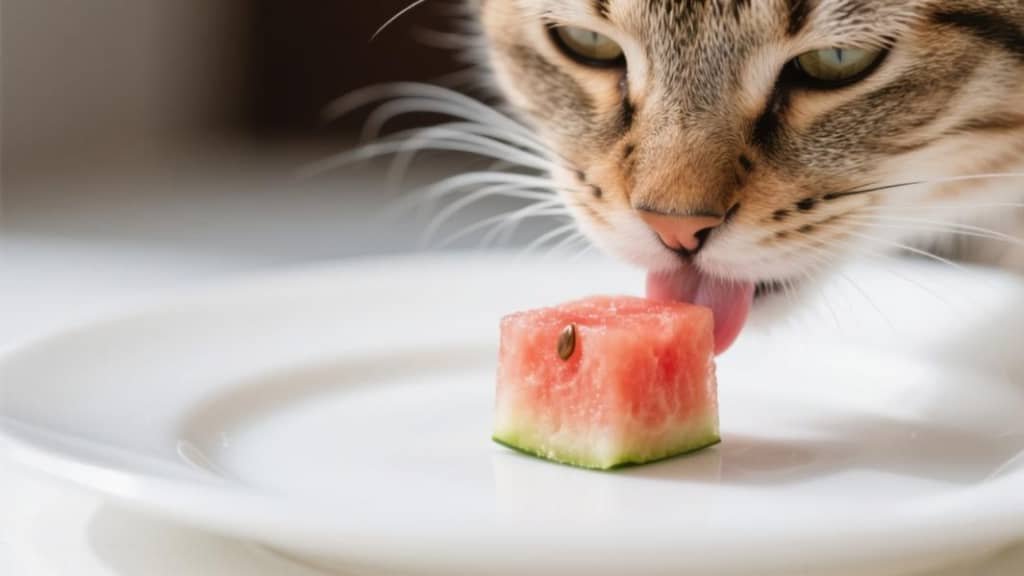
The biggest perk of watermelon for a cat is its incredible water content. A watermelon is about 92% water. This fact alone makes it interesting for feline health. Many domestic cats do not drink enough water on their own. Poor hydration can lead to urinary tract problems and put stress on their kidneys over time.
A cat might ignore its water bowl but show great curiosity in a juicy piece of fruit. Offering a small cube of watermelon can be a clever method for getting a little extra moisture into your pet’s system. This is especially true on a hot summer day. A little hydration boost.
A Tiny Bit of Nutrients
Watermelon contains nutrients like Vitamin A, Vitamin C, and potassium. A cat will only get a very small dose of these from a tiny piece. The amount is not enough to make a big difference in their overall health. Your cat should already receive all the necessary nutrients from their balanced, high-quality cat food. The presence of these vitamins is a small bonus, not a reason to make watermelon a dietary staple.
A Low-Calorie Snack
Many commercial cat treats are full of fillers, fats, and calories. A small cube of fresh watermelon is a much lighter option. A pet owner looking for a healthier alternative reward will find watermelon to be a better choice than many processed snacks found on store shelves. A simple, natural treat.
The Hidden Dangers: Parts of Watermelon to Avoid
This section is the most serious part of the discussion. The pink flesh might be safe, but other parts of the watermelon present real health threats to your cat. Knowing these dangers is the only way to share this fruit without risk.
Watermelon Seeds Are a Major Risk
Your cat should never eat watermelon seeds. Not ever. This is the most important rule. There are two big reasons to keep seeds away from your pet.
First, they are a choking hazard. The size and shape of watermelon seeds, both the mature black ones and the immature white ones, are perfect for getting stuck in a cat’s small throat. They can also create a blockage in the digestive tract. An internal obstruction is a grave medical emergency. It can turn deadly without quick action from a veterinarian.
Second, the seeds contain a compound that can release cyanide. A cat would need to chew and consume many seeds for it to be a true poisoning event. The risk, no matter how small, is not worth taking. Even a few seeds can cause an upset stomach. You should always buy a seedless watermelon or be incredibly careful to remove every single seed. No exceptions.
The Rind is Not for Chewing
The tough, striped green rind of the watermelon is another part that must go in the trash, not your cat’s bowl. A cat’s digestive system cannot break down the rind’s tough, fibrous material.
Your cat swallowing a piece of rind could lead to a gastrointestinal obstruction. This is a blockage in the stomach or intestines. It is a very painful condition for the animal and often needs emergency surgery to correct.
Also, the outer skin of the melon comes into contact with many things during farming and shipping. Pesticides and bacteria can linger on the surface. A good wash helps, but you do not want your cat ingesting any of that residue. It is best to keep the rind far away.
Too Much Sugar Causes Problems
Cats are not built to digest sugar. The natural sugars present in watermelon can overwhelm a cat’s system. Too much sugar, even from a natural source, can cause noticeable issues.
- Diarrhea: This is a very common reaction when a cat eats too much fruit.
- Vomiting: The cat’s body may try to get rid of a substance it cannot process correctly.
- Stomach Discomfort: You might see signs of cramping or gas.
A cat with a health condition like diabetes or one that is overweight should not eat sugary foods. This includes watermelon. The sugar can cause a spike in blood glucose or add unneeded calories to their diet. You should always speak with your veterinarian before giving any new human foods to a cat with a known health problem.
How to Share Watermelon With Your Cat the Right Way
You have reviewed the benefits and the risks. You have decided to let your cat have a little taste. Excellent. Here is the only safe method to prepare this treat. Follow these steps for a good experience for you and your pet.
The Best Way to Prepare Watermelon
This simple, four-step process will give you a cat-safe treat.
Step 1: Choose a Seedless Melon (or Remove Every Seed)
The simplest and safest path is to buy a seedless watermelon from the grocery store. Some “seedless” types still have small, soft white seeds. You must remove these, too. A regular watermelon with black seeds requires more work. Use a spoon or the tip of a knife to pick out every single seed.
Step 2: Cut Away the Rind
Take your slice of watermelon and carefully cut the pink flesh away from the white and green rind. Your cat should not lick or chew on the rind. Put the rind and all the seeds you removed into a secure garbage can where your cat cannot get to them.
Step 3: Make it Bite-Sized
You should now have a pure, seed-free piece of watermelon flesh. Cut this into very small pieces. A cube that is about a half-inch square is a good size. Small enough to not be a choking threat.
Step 4: A Treat is Just a Treat
Portion control is everything. One serving for a cat should be just one or two of these tiny cubes. A good guideline for all treats is the 10% rule. Treats should make up no more than 10 percent of your cat’s total daily calories. A fruit treat like watermelon should be an even smaller part of that.
Your Watermelon Questions Answered
Here are some quick answers to the most common questions about cats and watermelon.
How much watermelon can a cat have?
A very tiny portion. One or two small, half-inch cubes is more than enough for one treat session. This should be a rare treat, not something you give every day. Once or twice a week during the summer is a good frequency.
Can cats eat watermelon seeds?
No. This is the most serious rule. Seeds are a choking danger and contain compounds you want your cat to avoid. You must remove all seeds, black and white, before offering any watermelon to your cat.
Is the watermelon rind safe for cats?
No. The rind cannot be digested. It can cause a dangerous intestinal blockage. It could also have pesticides on it. Only the seed-free, pink flesh is okay.
What about watermelon juice?
Pure, homemade watermelon juice without any added sugar is safe in a very small amount. A teaspoon is plenty. You should not give your cat juice from a carton or bottle. Store-bought juices are almost always full of extra sugar and preservatives that are bad for a cat. The whole fruit piece is a better choice than juice.
What do I do if my cat eats seeds or rind?
Your cat might snatch a seed or a bit of rind off the counter. A single seed or a very small nibble of rind will probably pass through their system without a problem. You should watch your cat closely for the next 24 to 48 hours. Look for any signs of a problem. These signs include vomiting, diarrhea, acting weak or tired, not wanting to eat, or crying when you touch their belly. Call your veterinarian or an emergency pet clinic right away if you see any of these signs.
Do cats actually like the taste?
This is an interesting point. People love watermelon for its sweet taste. Cats, however, do not have the taste receptors for sweetness. So what attracts them? It is likely the high moisture level and the unique, soft texture. It is a new feeling for them. Some cats will be very curious. Others will sniff it and walk away with no interest at all.
Other Fruit Choices for Curious Cats
Your cat may enjoy a fruity snack from time to time. A few other options are safe in small, properly prepared portions. Always remove all seeds, stems, and peels.
- Cantaloupe: High in water content and a popular choice.
- Strawberries: Cut them into small, manageable pieces.
- Blueberries: Small and easy for a cat to eat.
- Peeled apples: Never give the core or seeds.
Just as important is knowing which fruits and foods to always avoid. Never give your cat these items:
- Grapes or Raisins: These are very toxic and can cause kidney failure.
- Citrus Fruits (Oranges, Lemons): The oils in citrus can cause a bad stomach ache.
- Onions, Garlic, and Chives: These are poisonous to cats and can harm their red blood cells.
Final Thought
So, the verdict is in. Can cats eat watermelon? Yes, the seedless flesh is a safe and hydrating treat. It must be given in small, cat-sized portions. Sharing this fruit can be a nice way to connect with your pet and help them stay cool.
Always follow the two most important rules. No seeds. And no rind.
You should also pay attention to your cat’s own preference. You might prepare a perfect little piece of watermelon, and your cat may just ignore it. That is perfectly fine. Don’t push it. Your cat is a meat-eater, getting all its needs met by its regular food. A tiny taste of summer is just a bonus for those cats who show an interest. A safe, refreshing, and occasional treat.